


 All Programs

Art is in everything. An interview with graduate and artist Xenia RAW

Hi everyone! Welcome to issue 5 of #ourstudents — a series of interviews in which our students talk about themselves and their art.
This issue’s guest is the artist Xenia RAW, who tells us about her work and about how she draws her son Ernest into making art.
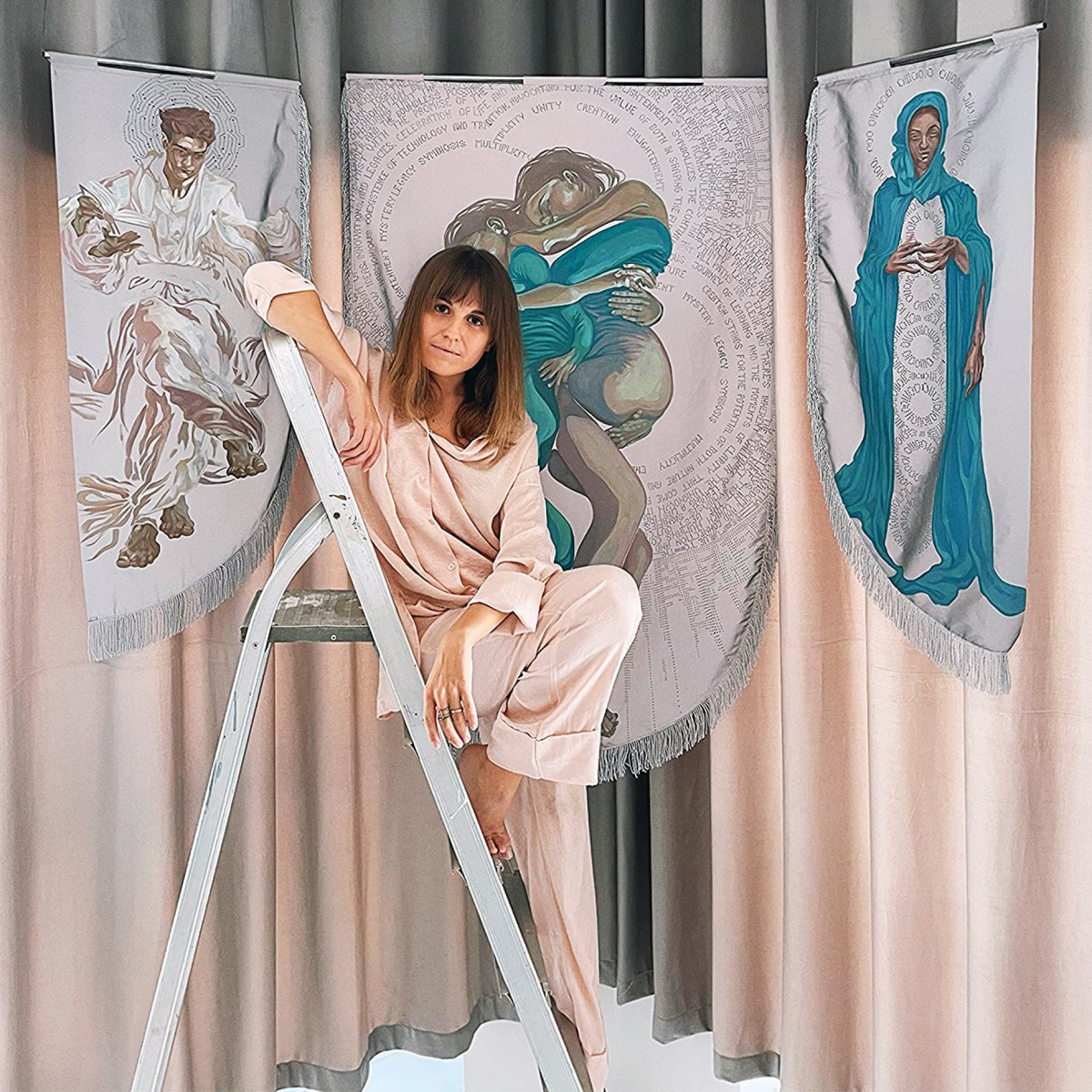
Can you tell us about your art?
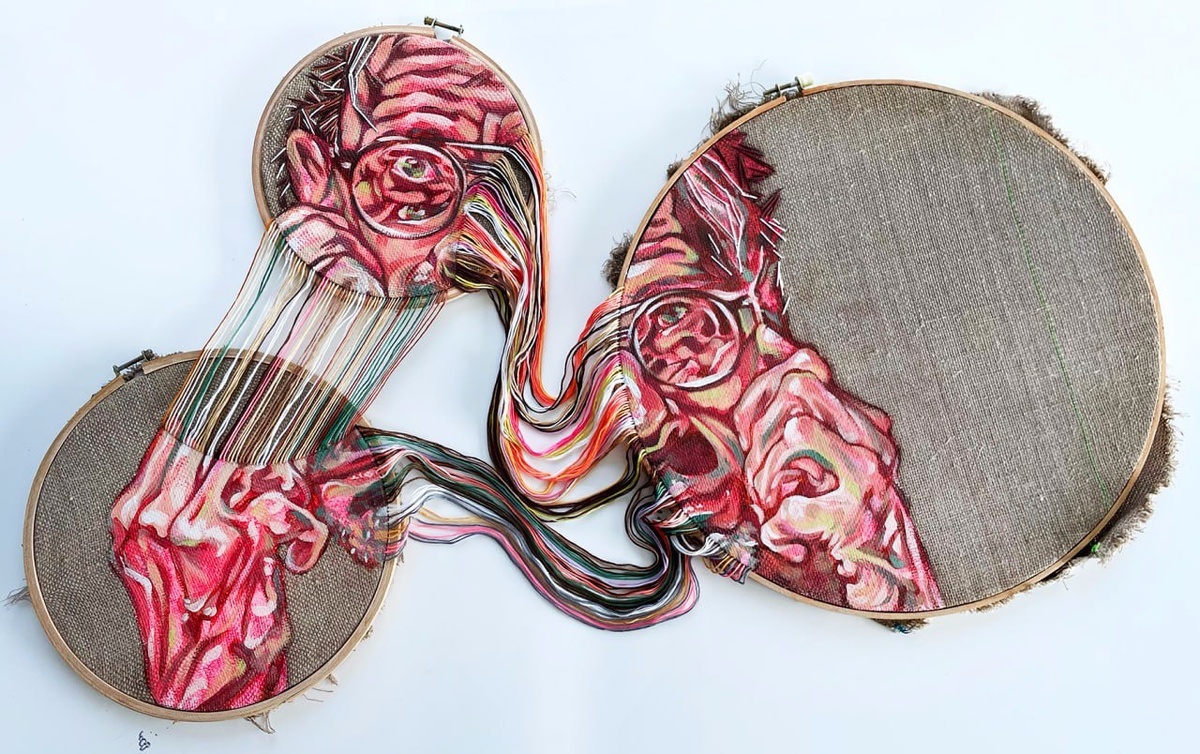
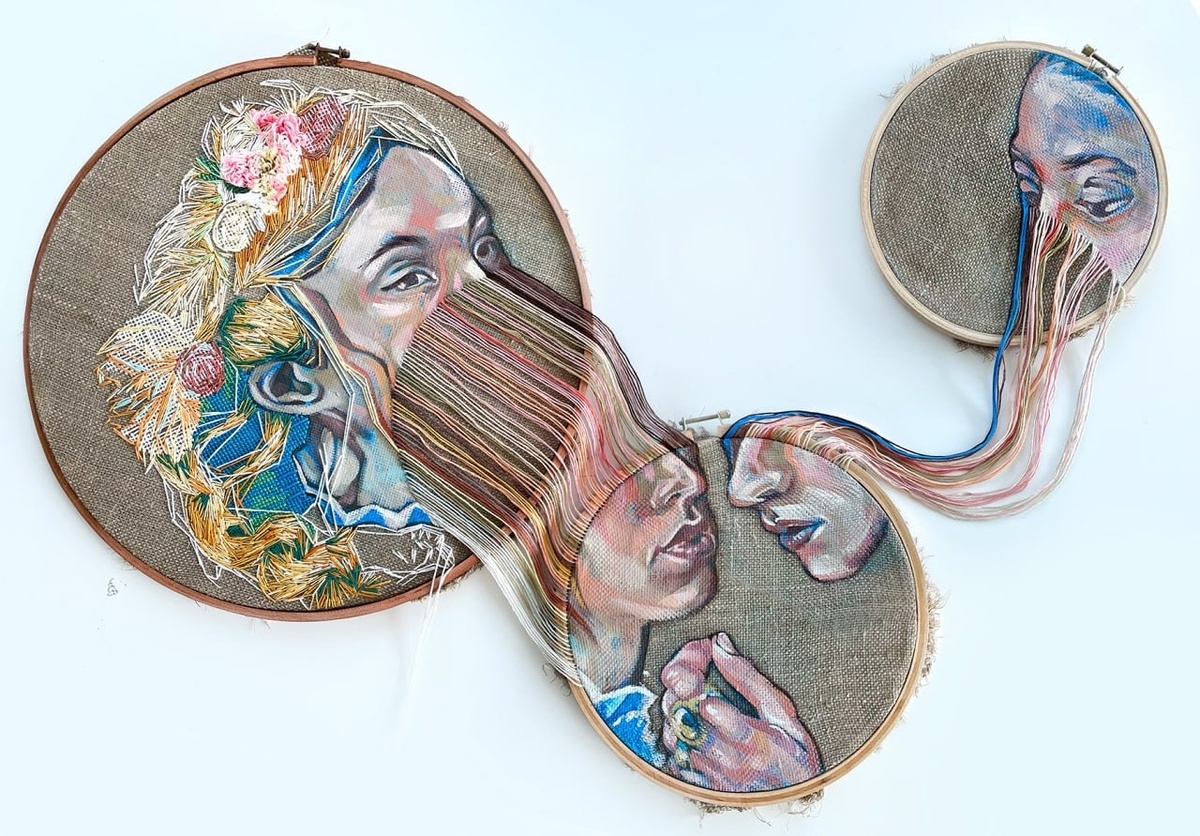
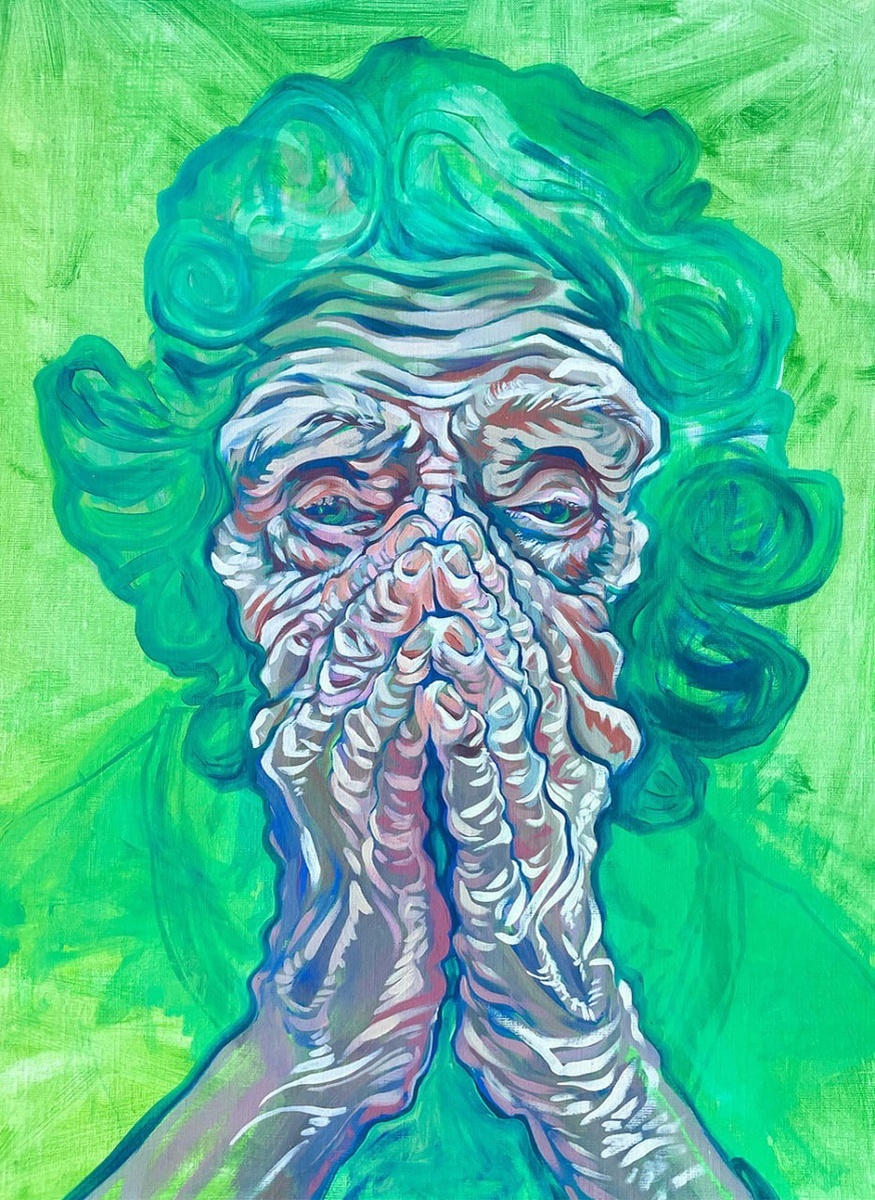
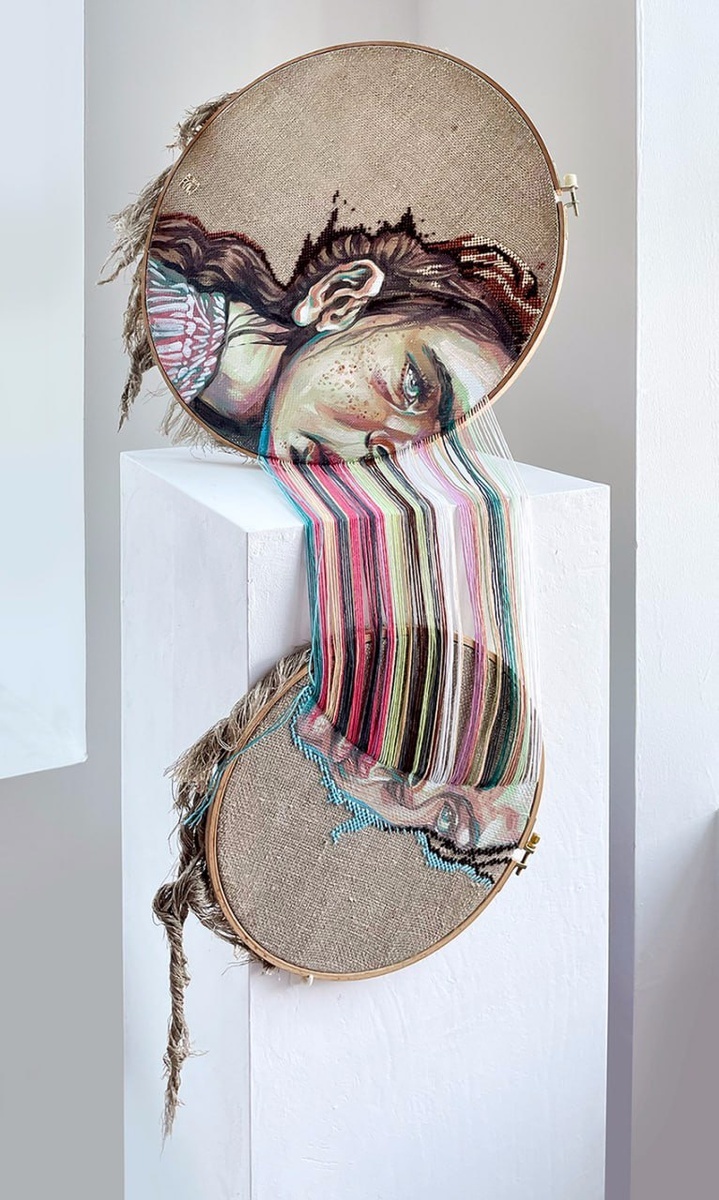
Studying dystopias, I came to the conclusion that what keeps us human is human error. I paint my “digital” muses — people who never lived and who were dreamed up not even by a human but by artificial intelligence. They are the best embodiment of the digitised person, the one who is looked at through the lens of statistics, economics and resources.
I take the image of a digital error, a glitch, and carefully embroider it in thread and beads over oil portraits. Painting creates a sense of distance, of something out of reach, while embroidery makes you want to touch. It embodies both the inviolability of the human body and the value of touching it…
How do you get a child interested in art?
Help them see that art is in everything. Encourage anything creative. When my son was two he poured his baby purée onto the table and started drawing in the puddle with his finger. Instead of thinking about the mess, or about how you don’t play with food, think about the fact that the child is watching his finger move through purée or rice, leaving lines with the table showing through. It’s beautiful — the process itself and his fascination with it.
One day Ernest set up the drying rack in the hallway and started jumping on it. When I asked what he was doing, he said he was making music. I agreed that it sounded beautiful, and sat down next to him just to listen. The different parts of the rack knocked against each other with different sounds, and that fascinated him.
Once a child feels that art can be made out of anything, that the main ingredient is curiosity, that it’s a way of knowing yourself, of communicating and of getting attention, and that there’s plenty of freedom in it — they’ll be hooked.
And of course adults have to show genuine interest in what exactly caught the child’s attention in an action, a drawing and so on. That matters enormously to children!
Not together — side by side. Each of us does our own thing. It’s a lesson in personal boundaries. But Ernest might make a comment I like, and I’ll bring his idea into my work. Or I won’t, and he knows there’s no reason to be upset, because sometimes he doesn’t like my ideas either. That’s normal.
Though sometimes on a plane or a train we draw one picture in turns. He drew a huge blue heart, I added a sun lounger and a parasol next to it, he filled the heart in with a grid pattern, I added a ladder — and there we had a heart-shaped swimming pool.
When you have a child, the more pressing question is how to find time just for yourself. Your child already gets a huge amount of your time every day. What’s left to choose is the quality of that time — and you can choose to make it creative.
How do you juggle it all without burning out?
You don’t. You just stop worrying about it. And delegate as much as you possibly can.
Want to build a career in art?
OnStudy online programmes, led by curator Maria Hiltunen-Sedoshenko: art management, selling art and building an artist’s career.
 WhatsApp
 Telegram
 I have a question

