


 All Programs

Making art through deep horror. An interview with Vanya Kasatka

Hi everyone! Friends, today I want to introduce you to a creative soul, an artist and poet — Vanya Kasatka, in issue 14 of our #ourstudents series.
As a reminder, this is a run of interviews in which our students talk about themselves and their art.
I also perform noise hip-hop and write all kinds of grim material, both in text and in music, under the project name kasatka tonet.
Vanya comes from the Kuban — a “Kubanoid,” in the good sense of the word, born on the Black Sea coast. He has lived in various Russian cities, most recently St. Petersburg. These days Vanya lives in Gyumri, Armenia.
Tell us about yourself and your path as an artist.
I’ll speak in slightly vague terms, simply because in this new country I literally tore a stack of pages out of my life and began a jittery process of reassembling myself as a person — gluing my personality back together mentally and creatively, which is also why I use a pseudonym.
I’ve done all sorts of things in my life, from organizing festivals and raves to writing about horror in film and literature, from lecturing to community work, but I always lived a marginal bohemian life, and I still do, only more often as a hermit.
I read poetry in bars and clubs, and I always liked that crowd — I once read at a jazz club, and the whole place was steeped in shallow snobbery, which usually turns my stomach. I’d rather give a lecture on cinema in a bar or an abandoned building where people can get wasted and have fun watching a film than in some “comfortable” venue with cookies, soft pink sofas and tea.
My move was forced. I refused to leave Russia until the very last moment, until circumstances lined up so that the danger to me and to someone close to me at the time outweighed everything else.
I talk a lot now with people who did the same thing, and I’ve noticed that an abrupt change of surroundings often wrecks relationships — people can be mentally unprepared for it, which is where the shared pattern of binge drinking, everyday conflicts and worsening mental illness comes from. I wasn’t ready for this move either.
I’d take that as a starting point and recommend that people study their new country inside and out — its mentality and art, its religion and daily life — if they find themselves at a depressive rock bottom. In my case Armenia first served to deepen the self-destruction I’d brought with me from Russia, and in the end brought slow but steady healing.
How did you come to contemporary art?
I’ve been surrounded by people in the arts all my life — horror writers, musicians of wildly different styles, poets and painters, philosophers. I found myself in the way they saw the world — they often mirrored and expanded my own views on life and served as the fires that kept me developing. I hope it worked in the other direction too.
I’ve been writing poetry and prose since I was about fifteen; I’m thirty now. Some of the poems I wrote back then are better than what I write today, and the music I made while studying at music college was the kick I needed to take it up again. I’d been thinking about it back in St. Petersburg, with a few timid attempts.
What was the turning point in your work?
To push off the bottom I hit a bit over two years ago, I needed some kind of therapy, some way of reflecting on the horror inside and outside me. When you turn the page on your life and want to start from scratch, you try to work out what has actually mattered to you all along — what could give you a high without substances or drink, without love or the grind of chasing money.
Looking back, I realized that this “something” was art in the broadest sense — the place where I express myself honestly and through which I can speak frankly to people about myself and about the world.
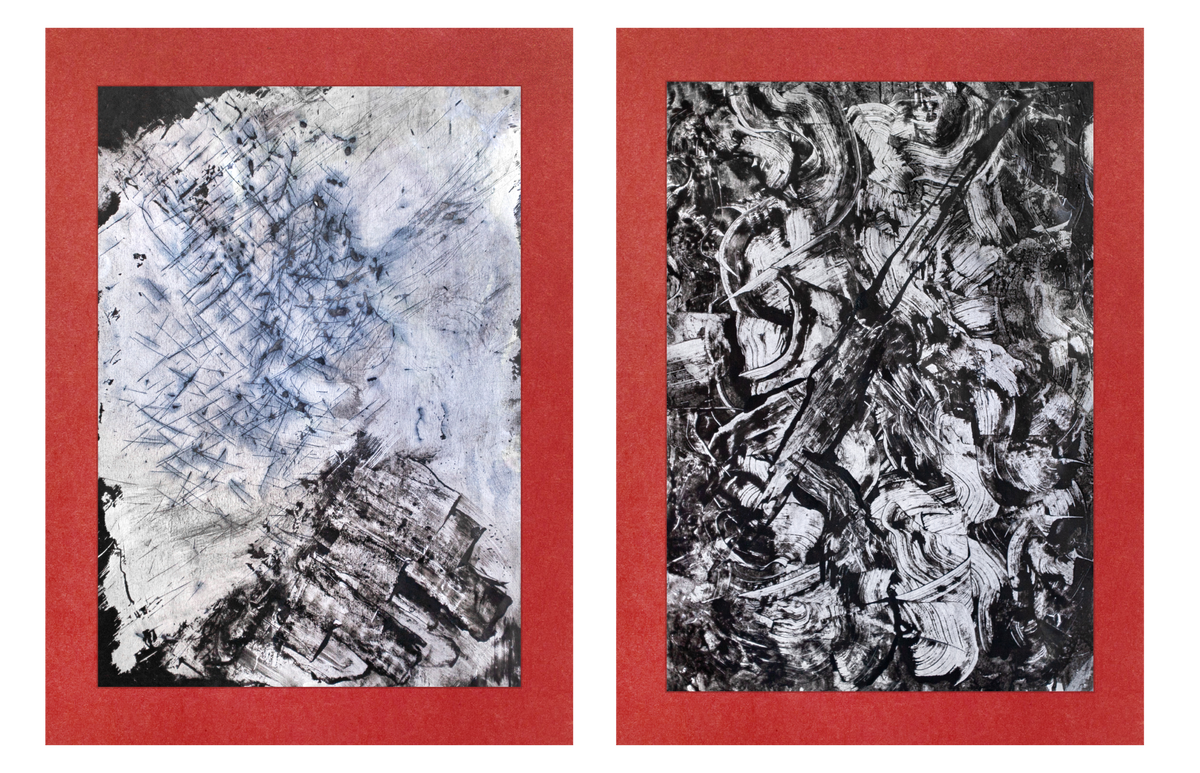
That’s how the first series of ink works, “Cuttlefish of Anxiety and Violence,” came about, along with “XV,” my first album of noise music, about migration, loneliness and the inner challenges you run into.
I turned down a very good, well-paid job in Yerevan as an editor, realizing there simply wasn’t another path for me — either I’d die slowly with no crumbs of ecstasy, or I’d die anyway but at least meaningfully and partly high on it, projecting my perception outward and finding kindred spirits.
I focus on the emotion of fear — or, more broadly, on deep horror.
It’s the moment:
– when a panic attack jumps you at the sight of an approaching police car,
– the long instant of a silent scream when you realize what you did yesterday while out of your mind,
– it’s also the rupture of your ties with the whole world and the descent, step by step, into a whirlpool of acute loneliness,
– it’s addiction and the fight against it,
– it’s mental illness,
– and it’s a visionary conversation with your personal demons and with the evil that now covers the entire planet.For all my reserve, I’m an empathetic person — I’m shaken by the subjects of genocide and war, by the tragic deaths of people my age and by acts of violence. I loved all things horror from childhood, and maybe that’s where this consistent interest grows from. The first books I consider landmarks for me were Byron’s poem “Cain,” Goethe’s “Faust” and the poems of the accursed poets; the first paintings were William Blake’s “The Great Red Dragon” and Velázquez’s “study after the portrait of Pope Innocent X,” though memory can play tricks.
Why these themes in particular?
My own foreignness has haunted me my whole life, along with a fear that’s forever on my heels, grabbing me by the throat and whispering something unsettling. It matters to me to work through it and strengthen myself in the process, to draw the parallel and close the gestalt, to understand that we’re all vulnerable and that all of us, to different degrees, are looking for rescue and for a light that can pull us out of the depths.
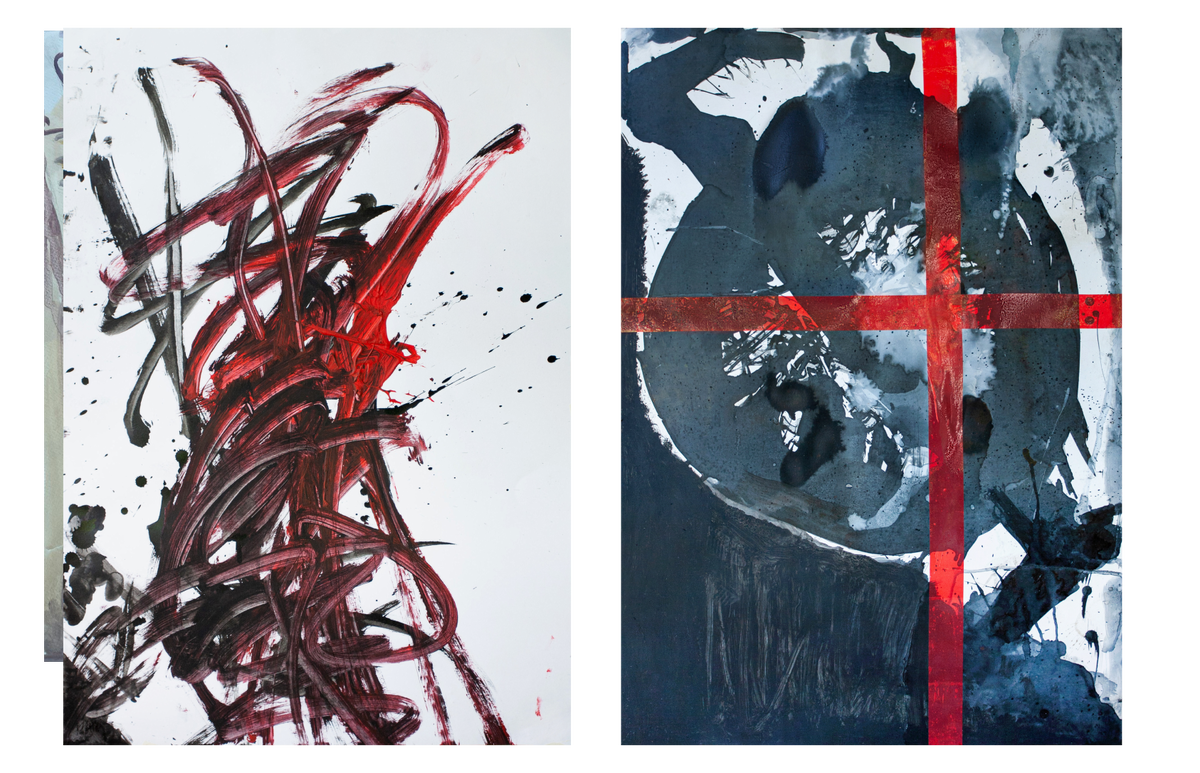
Along the way, though, I often found kindred souls who feel much the same. They’re usually terrifyingly lonely, and usually they end up with a one-way ticket, or they die without dying.
What I’d like my work to convey is that fear of yourself and of the world often can’t be cured by shifting the spectrum of your perception; all we do that way is lose ourselves, and then an inevitable, unpredictable breakdown follows.
“Deep horror,” in that case, can serve (I hope it does) to bring together the broken, the defeated, the addicted and the “weak” by the standards of social norms and morality, of “correct” thinking.
Which artists and writers influence your work?
The theme of darkness runs through the work of Giger and Kunstler, and I feel close to Max Ernst and Van Gogh as well. Among films, David Lynch’s “The Elephant Man” matters to me; among contemporary writers I’d name Jacques Schusterman, and in music I look to Boyd Rice and Navad Smith.
What are your immediate creative plans?
My first exhibition in Gyumri is scheduled for autumn 2024. I’m still finishing the works — some had to be redone from scratch — and there’ll also be a noise concert and a performance by a musician friend. We have a chance to do all of it free of charge with the backing of a sponsor who connected with our work; I think people will come, and we might even make a little back on posters and stickers.
Here in Gyumri, even before the local projects started, I met performers, artists and musicians, including some from Europe and the US — we write, we call, sometimes we meet up. I’ve discussed making a joint noise album with someone from America who used to work in the Manhattan art scene and personally knows a number of well-known people, so there’s a chance of heading off to other continents. My work can’t be shown in Russia, but the interest is there; people are slowly moving away from obscurantism and insularity. I think I’ll stay in Armenia for a while, and after that I’ll keep taking new steps toward the horizon, wherever it turns out to be.
What helps you stay inspired and keep going?
Realizing that you stand on your own and that the people you love are beside you is worth more than any inspiration. Art, creative work — it’s therapy and it’s a burden, and once you make peace with that, you can do anything, absolutely anything.
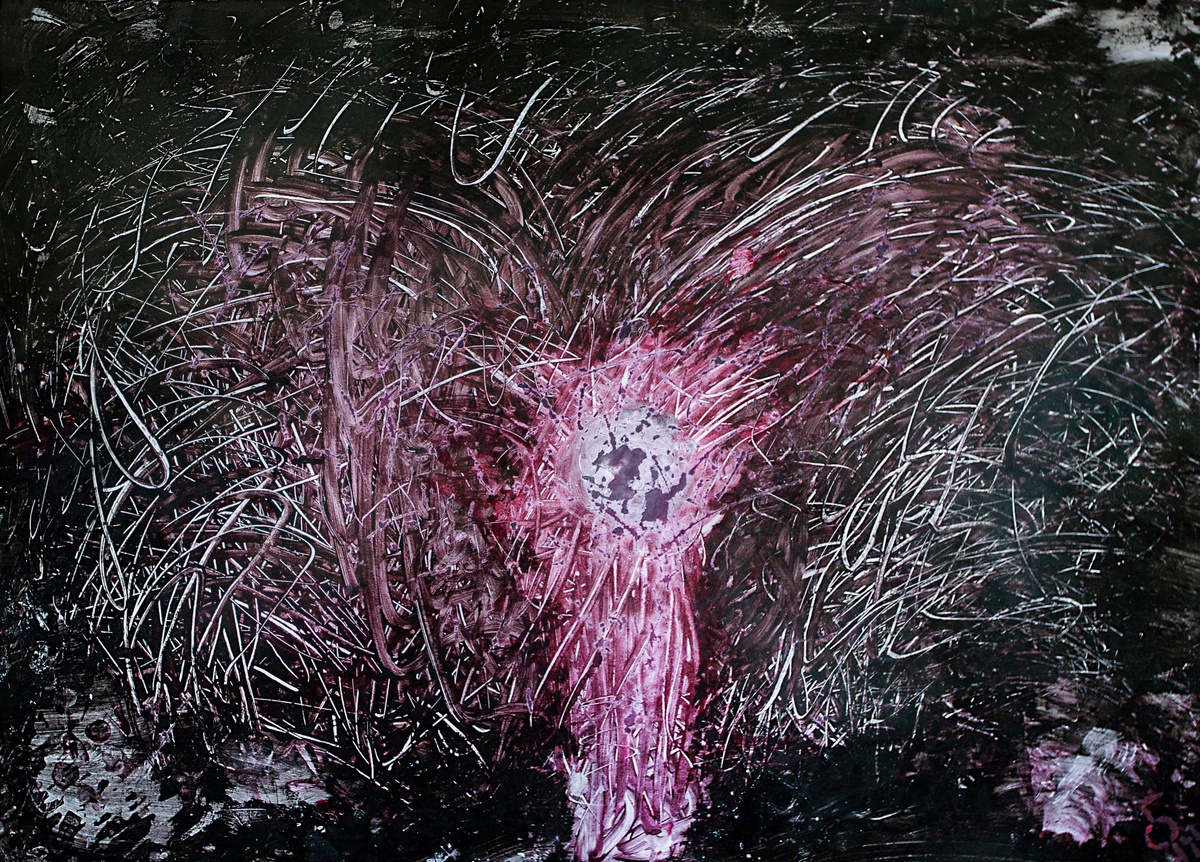
The deaths of people close to you, pain, trouble — it all leaves its mark in a head you can’t drown in liquid, so it’s better to channel it into paintings and lines than into triggers and drugs. The endless contrast between your inner and outer life is forever trying to pull your mind and body apart, but once you accept that, you understand that tragedy and happiness can inspire you equally — a friend’s suicide as much as a new love, a dead end as much as a new project. We all run on contrast inside our heads.
In the end, the greatest source of inspiration is the people close to you — the ones who draw inspiration from you and give it back. No amount of isolation from society will make you happy, because you’ll just be feeding your paranoia and narcissism until you find at least one person capable of understanding and loving you. It doesn’t matter in what sense — what matters is that there’s at least one, because that’s what keeps you from giving up, from wanting to disappear into the world without a trace, from abandoning the thing that matters most to you.
Which moments in your life shaped you as an artist?
There were plenty. When you feel that you’re not like everyone else, the way the street kids look at you, the way classmates bully you at school and the way you look in the mirror hating your own reflection.
The way a riot policeman’s baton comes down on you while the crowd is hauling off your friends and acquaintances, and you understand that people can be turned into enemies, wiped out for the sake of an idea, stripped of everything — and you alone, in an instant.
When your mind slips from the sheer amount of alcohol pouring into you like a poisonous elixir, when you realize you’re getting older, that your strength isn’t what it was and your reason is weakening, the way you run from the police as if in the rhythm of a nightmare, the way you play Russian roulette with your own life using a knife and the wind.
When you fall in love and forget about everything else, when you talk with the person you love, the way you realize that a single moment of honest flight can bring all your dead cells and thoughts back to life — you take it in and it charges you up.
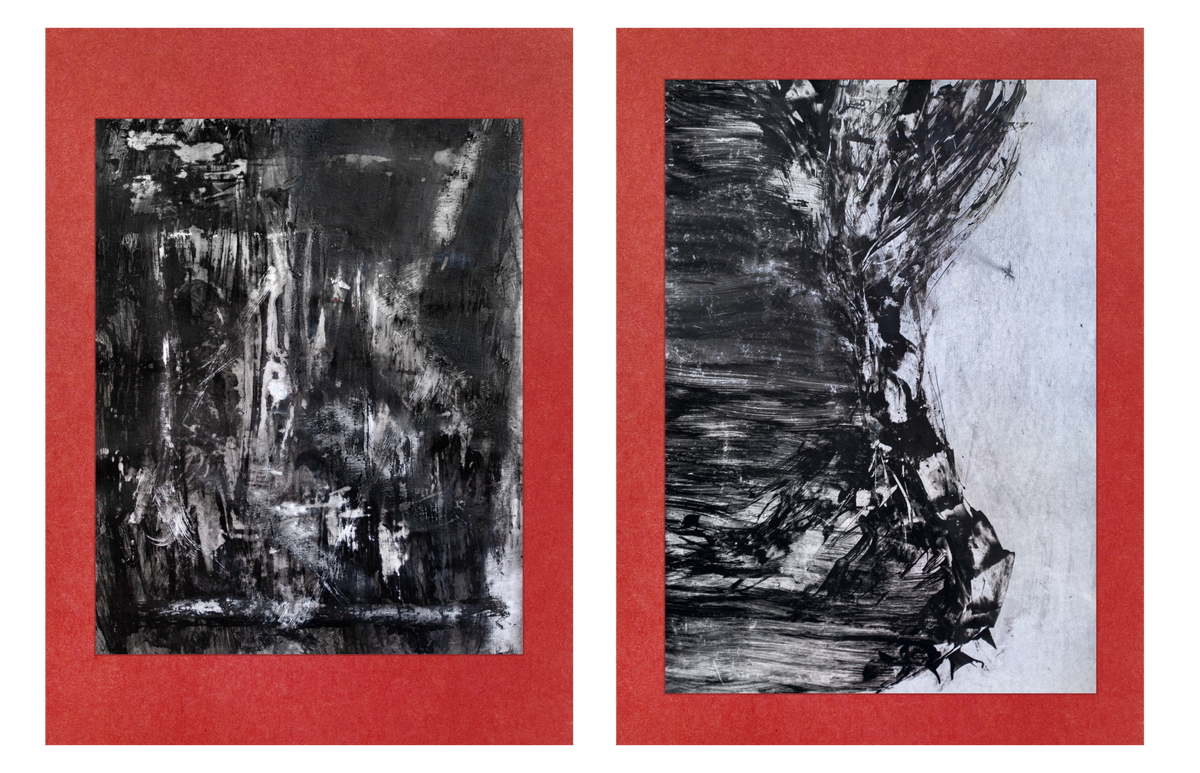
Every one of those moments burns you in its own way and turns you into clay in the hands of the demons and angels who make a new version of you, shaping forms and whipping up storms in your soul, all so you remember and never forget that you’re alive and that great things are still waiting for you.
What role does the program play in your life?
For me the program fills exactly the gap in knowledge I was totally missing.
It gives real structure to the steps I take by force of will, though I wouldn’t say they come easily — it’s as if you’re learning a new profession, trying to look at your own art from a different angle without losing what’s essential in it, while, how to put it, trying on the coat of a manager and of discipline.
You come to understand that nobody but you will save you from oblivion. That deliberate approach is exactly where I’ve always been weak.
On top of everything else, the community that has formed around the course is a huge motivation to keep working on yourself; I’m genuinely glad for my fellow students and everything they’ve achieved.
Want to build a career in art?
OnStudy online programmes, led by curator Maria Hiltunen-Sedoshenko: art management, selling art and building an artist’s career.
 WhatsApp
 Telegram
 I have a question

