


 All Programs

Felt art and inspiration drawn from fruit and vegetables

An interview with Elena Belyaeva
Hi everyone! Welcome to issue 15 of our #ourstudents series — interviews in which our students talk about themselves and their art.
This issue’s guest is Elena Belyaeva, a textile artist — or, to be precise, an artist who works in felt.
Tell us how you started working with textile art, and with felt in particular.
Five years ago this was a completely new material to me — I had no idea how to work with it. I focused on needle felting, where the wool is matted together with a special barbed needle. One of the advantages of that technique is that you can make small three-dimensional objects with realistic detail.
What drew you to needle felting?
I wasn’t reinventing the wheel, but I searched meticulously for my own ways of handling colour, texture and surface. I work with wool that’s already dyed, and the same laws of colour apply here as in painting. I loved how I could get the result I wanted through warm-cool contrast, playing with tone, working in glazes — I’m very fond of the way one colour shows through another. I looked for ways to get around the limits of the material and achieve the effect I was after. Wool is matte and absorbs light, for instance, so an object can look quite flat despite its volume.
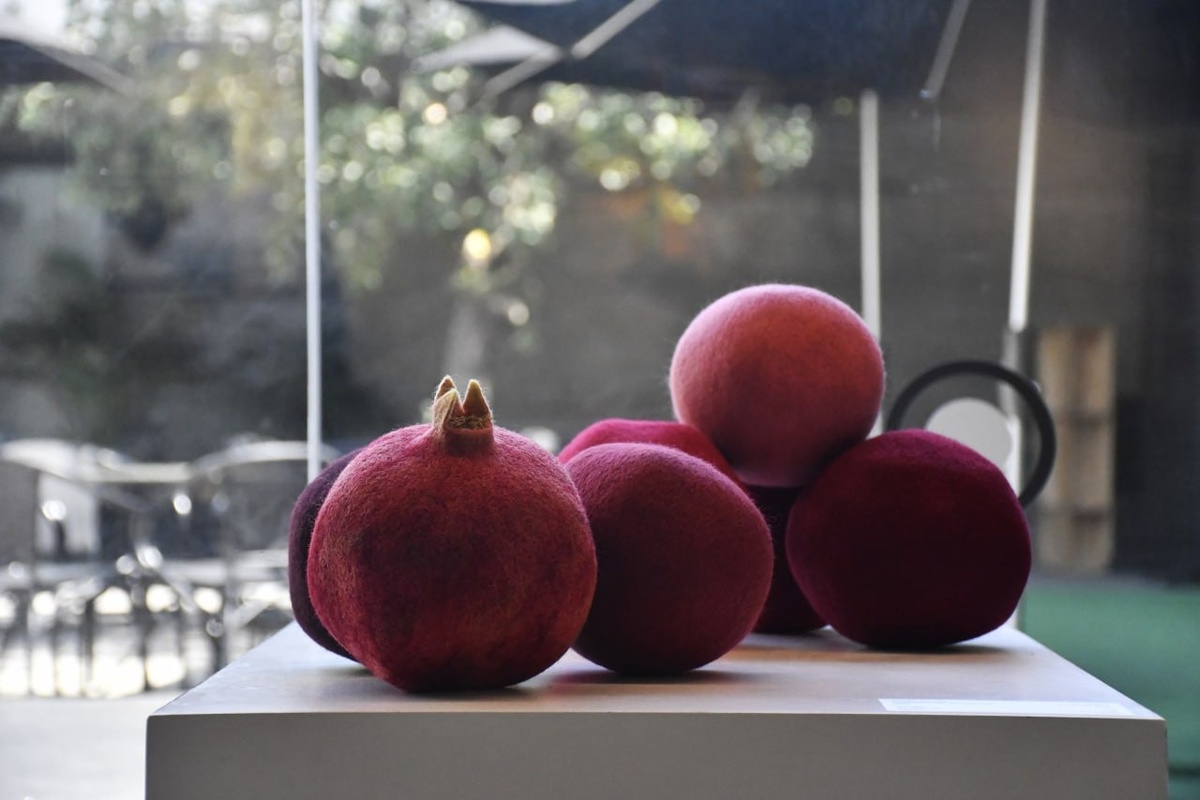
I polished all of this, practised and drilled it — on fruit and vegetables. They were always at hand, they were endlessly varied and they kept setting me new challenges. You never really finish learning a material and a technique; you only keep growing and opening new doors. But once I was confident that I understood this medium, I reached the point where I could speak to the world through it.
What themes inspire you in your work?
To my own surprise, fruit and vegetables turned out to be triggers of a kind. Whenever I worked on one fruit or another, stories from childhood would surface — things my mother and grandmother used to tell me about it.
My life is split exactly in half between two countries and two cultures. Memory and identity have always mattered to me, and they matter still. In a situation like mine you feel it even more sharply — when you’re no longer there but not yet here, when you’re already here but still there. Who are you? Where are you? Nothing disappears, nothing is forgotten, but it transforms and gets rethought. I explore this theme in various ways. Felt simply showed me one more path.
I only began taking part in exhibitions and appearing in magazines fairly recently, in 2022. The projects were completely different in scale and format — large and small, online and offline shows, art fairs in Europe and America.
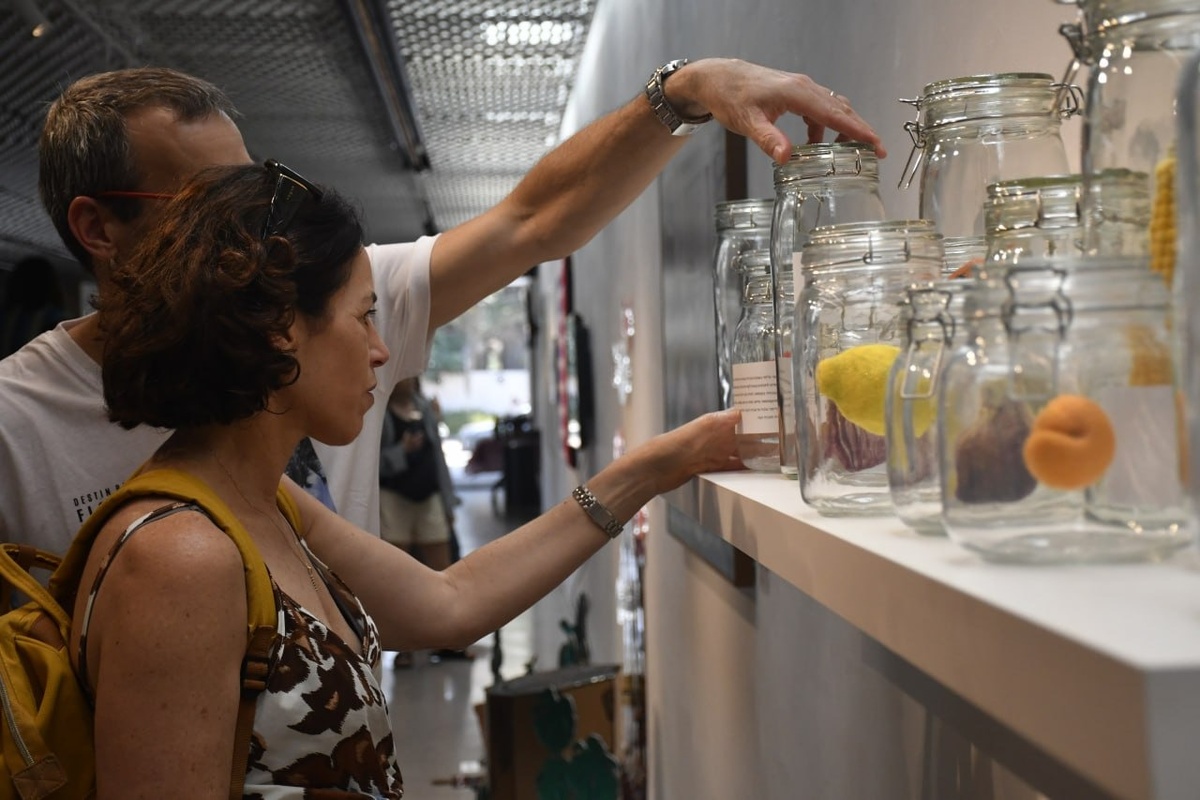
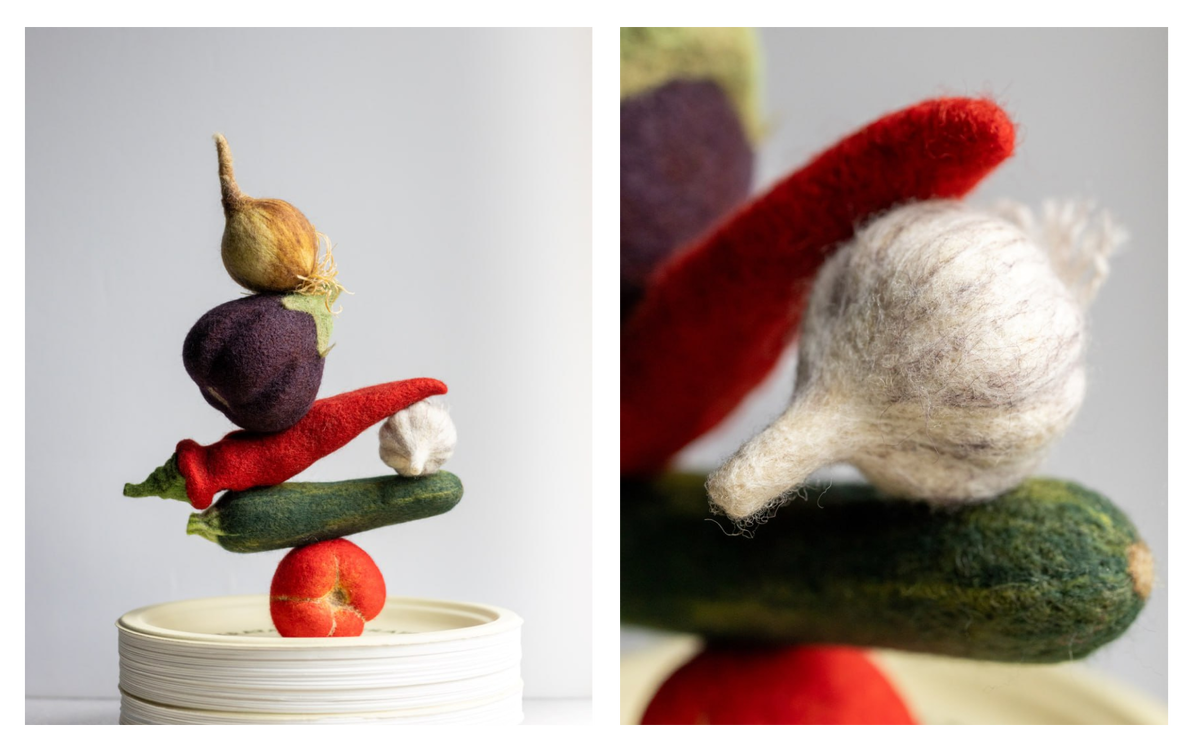
In 2023 I started getting to know the local Israeli art market. I organized my own show at a winery — “Receptors for Memory”, a project very dear to me, which brought together works united by the theme of personal and collective memory and cultural codes. Some of those pieces, “Memory Capsule” and “Lunch for 7 Billion Guests”, along with a new work, “The Interrupted Picnic”, are now on show in a local group exhibition, “The Art of the Picnic”.
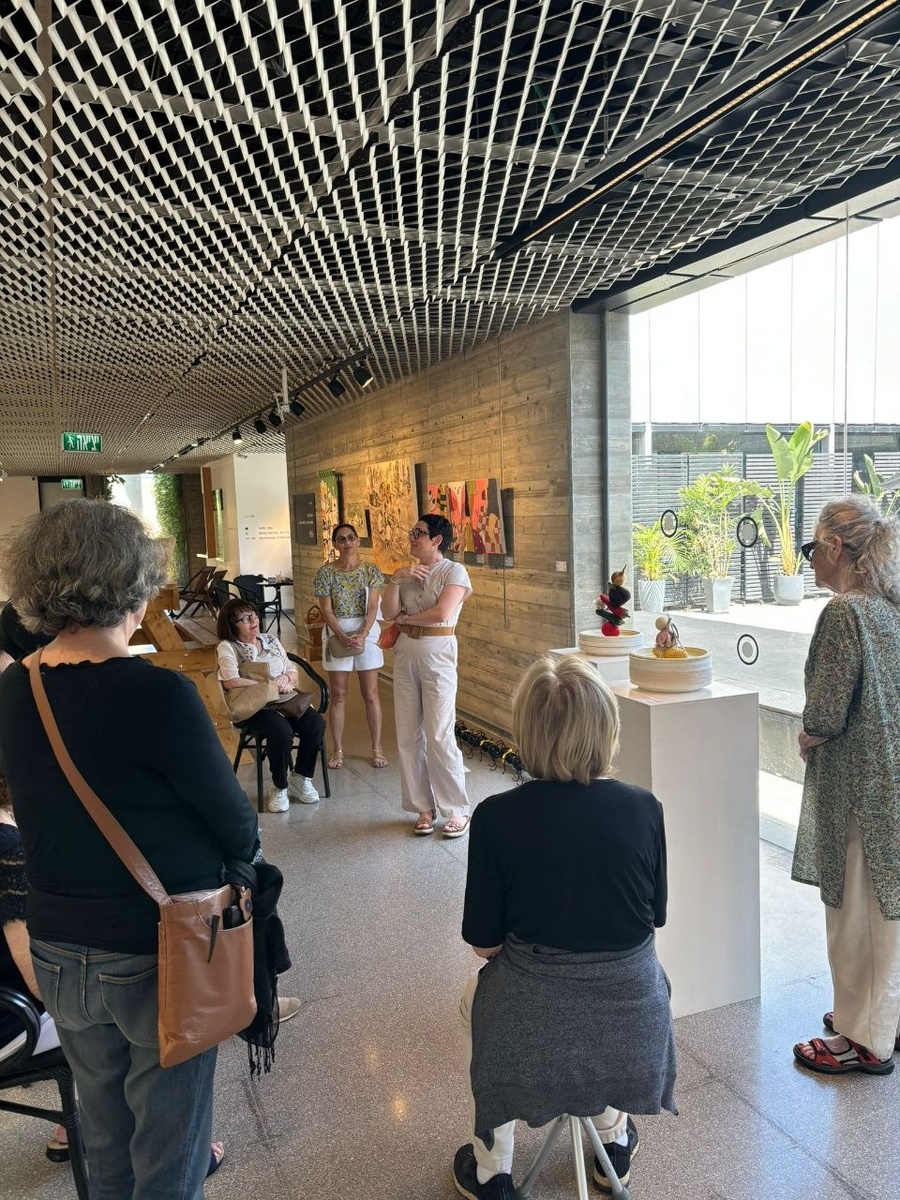
At both shows I got to talk with visitors a great deal, and that confirmed some of my hunches. My journey along the roads of memory isn’t provocative or shocking. Some people call it nostalgic. And the medium itself helps me set that mood.
That first rush of delight and surprise that the material can be transformed like this nudges people, literally and figuratively, to touch the subject of memory and start a conversation. A conversation between people of different generations, different cultures, different views. What do these memories mean?
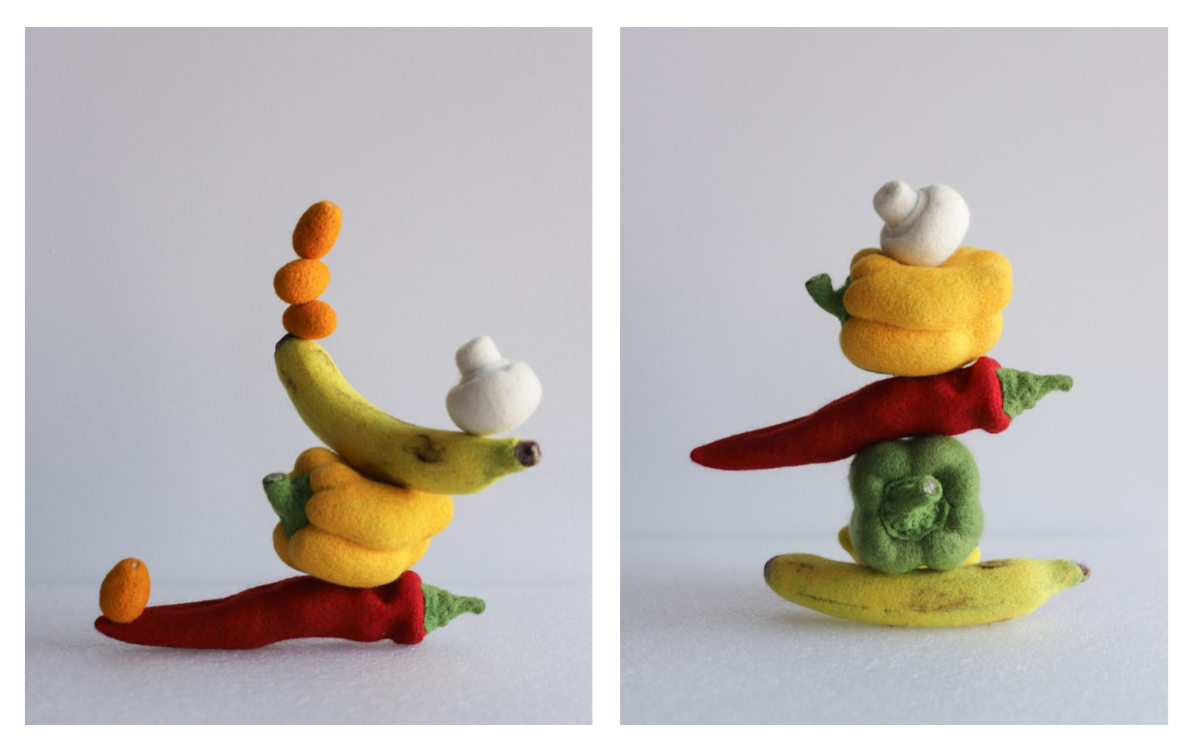
Through memories I want to bring people together, to show how much we have in common and that our differences are simply a reason to learn more about each other. These small, simple memories let us step out of the noise of information that surrounds us. They take us back to the starting point; they show how things actually were, rather than how we’re told they were.
How did studying on the “I Want Into the Art World” course affect your practice?
All of that was preceded by the “I Want Into the Art World” course. At some point I realized I knew nothing at all about the world of contemporary art. My work surprised people, but it stayed silent. One single question turned me around 180 degrees: “What is it you want to say with your art?” It was like opening a chakra. Everything shut away inside me came pouring out. And then came the work — a lot of work. The most important result of the course was understanding myself and my art.
There’s been a lot of interest in textiles in art recently. Felt, one of the oldest textile techniques of all, has enormous potential for carrying an artistic message. It has a huge range of qualities, some of them completely contradictory. Felt is soft, velvety and tactile, yet at the same time dense, durable and hard-wearing. The wool it’s made from is light and pliable. It will take any form the artist’s imagination suggests, in two dimensions or three. Artists working with felt make pieces in all kinds of styles — abstraction, surrealism, fine art.
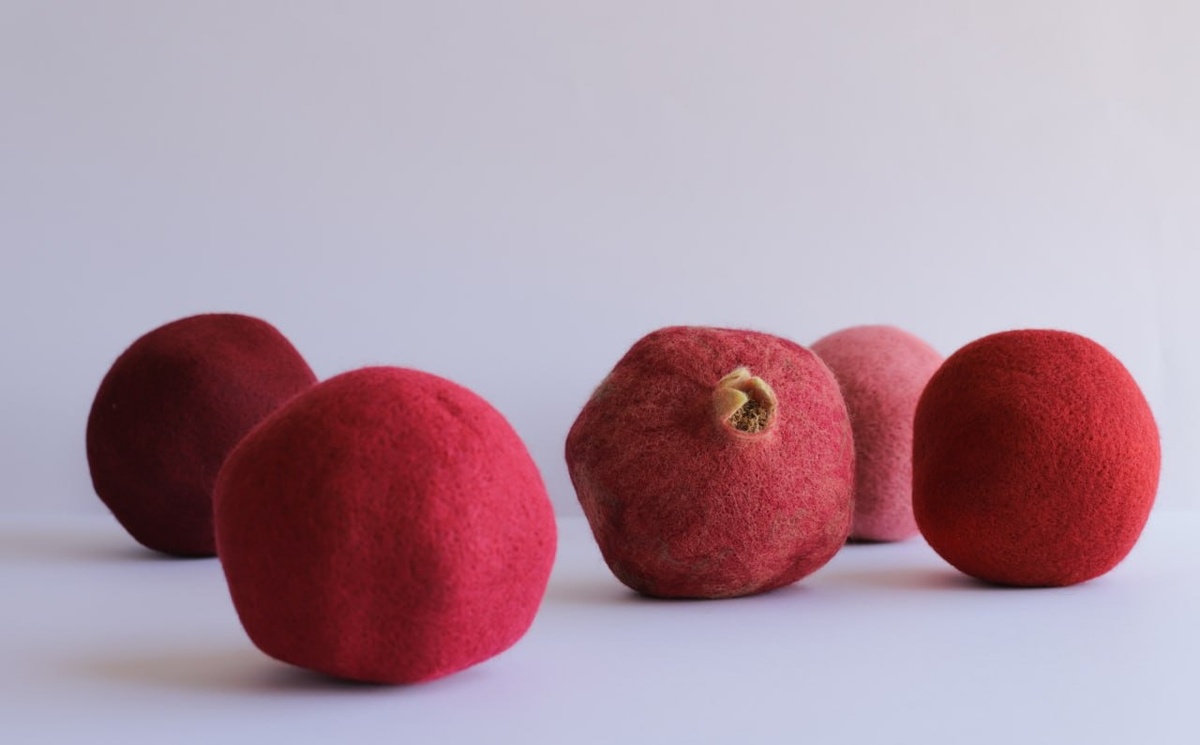
Working with felt has opened up enormous room for experiment, both with the material itself and in terms of collaborations. Some have already worked out well — a project with a textile artist in which we combined fabric and felt. Others are still at the planning stage. My dream is to collaborate with an olfactory artist and carry on the “Lunch for 7 Billion Guests” series by adding scent memories. I’d like to rethink some traditional techniques, appliqué for example, and give them a new reading in textile collage. I’m planning a series that combines felt and ceramics in a single object, using the contrast between the two materials to show different qualities of memory. I’m at the start of a long stretch of research right now.
Want to build a career in art?
OnStudy online programmes, led by curator Maria Hiltunen-Sedoshenko: art management, selling art and building an artist’s career.
 WhatsApp
 Telegram
 I have a question

