


 All Programs

The Myth of the City’s Ruins. An Interview with Irina Ionina

Hi everyone! Welcome to issue 16 of our #ourstudents series — a series of interviews where students talk about themselves and their art.
In this issue we want to introduce you to Irina Ionina, an artist from St. Petersburg. She works with public space in a variety of ways, from street art to institutional projects.
Last week Irina had an opening (we wrote about it in this post).
“Cities built on avos’ are never walled” is a folk proverb, one of several cited in Dahl’s dictionary under the entry for avos’ — the Russian word for trusting that things will somehow work out. The exhibition was conceived by Irina as a presentation of her “Neo-Neo-Russian Style” project.
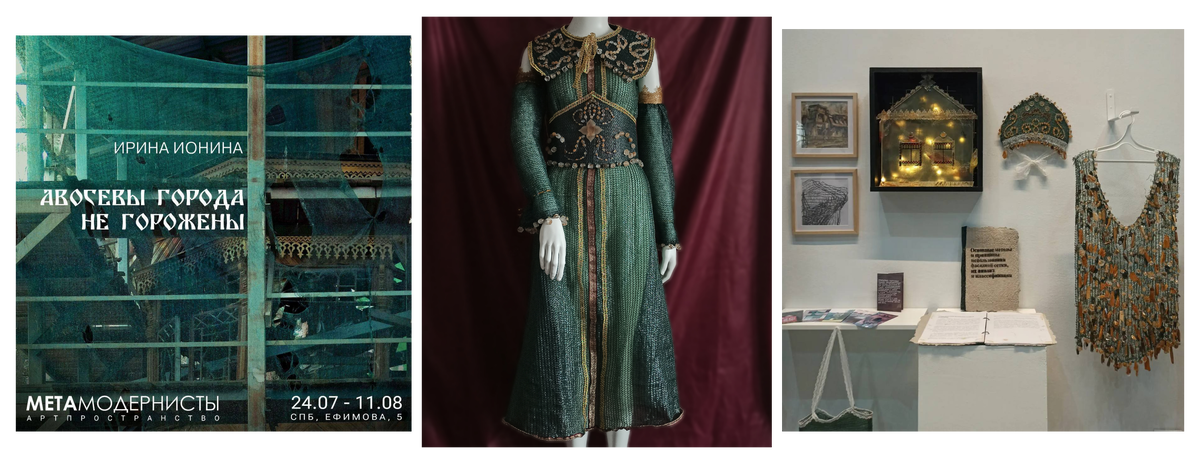
Share your impressions of the opening.
The opening went really well. We made it open to everyone — I wanted anyone who felt like it to come. It was lovely to see colleagues I’d met on previous projects. I was glad the guests were interested in the concept, and I enjoyed answering their questions.
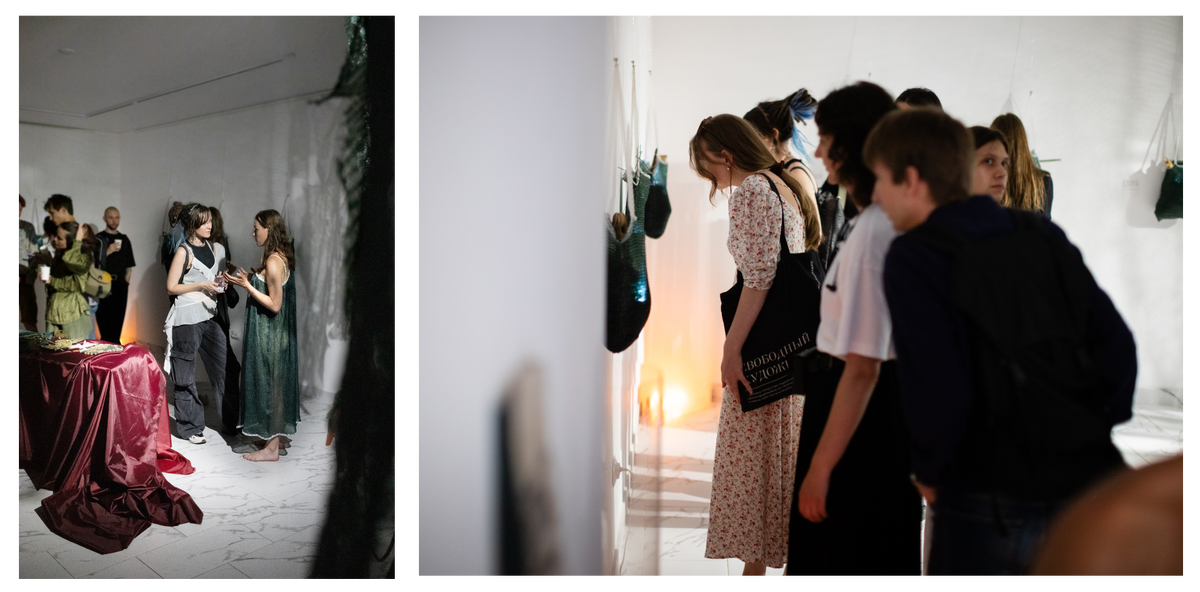
The exhibition is made as a total installation — there aren’t many objects as such, though the gallery space itself is small, which works in my favour: the bigger the space, the harder it is to build the architecture of a show. This is my first solo gallery project, and I worked on it on my own, without a curator. The concept of the show is built on the idea of a ritual or rite: dimmed light, warm accents imitating flame; a table covered in burgundy cloth with a dress on it, its hem pointing towards the exit; a list of lost architecture with construction dates, deliberately roped off in red.
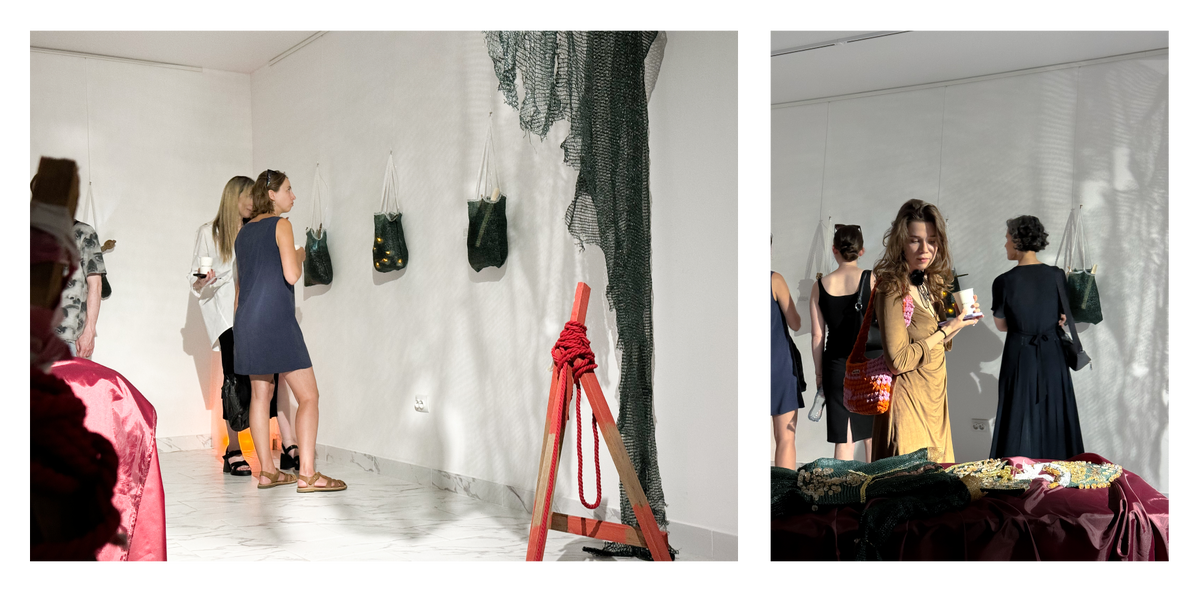
As part of the exhibition we’ve planned walks around my street art works and an artist talk. I’ll be giving a guided mediation through the show, and people can ask me anything they like.
What other project are you working on right now?
Right now I’m working on a multidisciplinary project called “Neo-Neo-Russian Style”. The project constructs a myth about the emergence of a new cultural style. It began with research into decaying wooden buildings — dachas and country estates built at the turn of the 19th and 20th centuries in the Neo-Russian style — and with the ironic use of façade netting as a material that was supposed to help restore them.
The joke is that these buildings really are subjected to a procedure called «conservation of ruins» — rotting, half-collapsed houses are surrounded with scaffolding and wrapped in netting. And the houses go on crumbling and rotting inside.
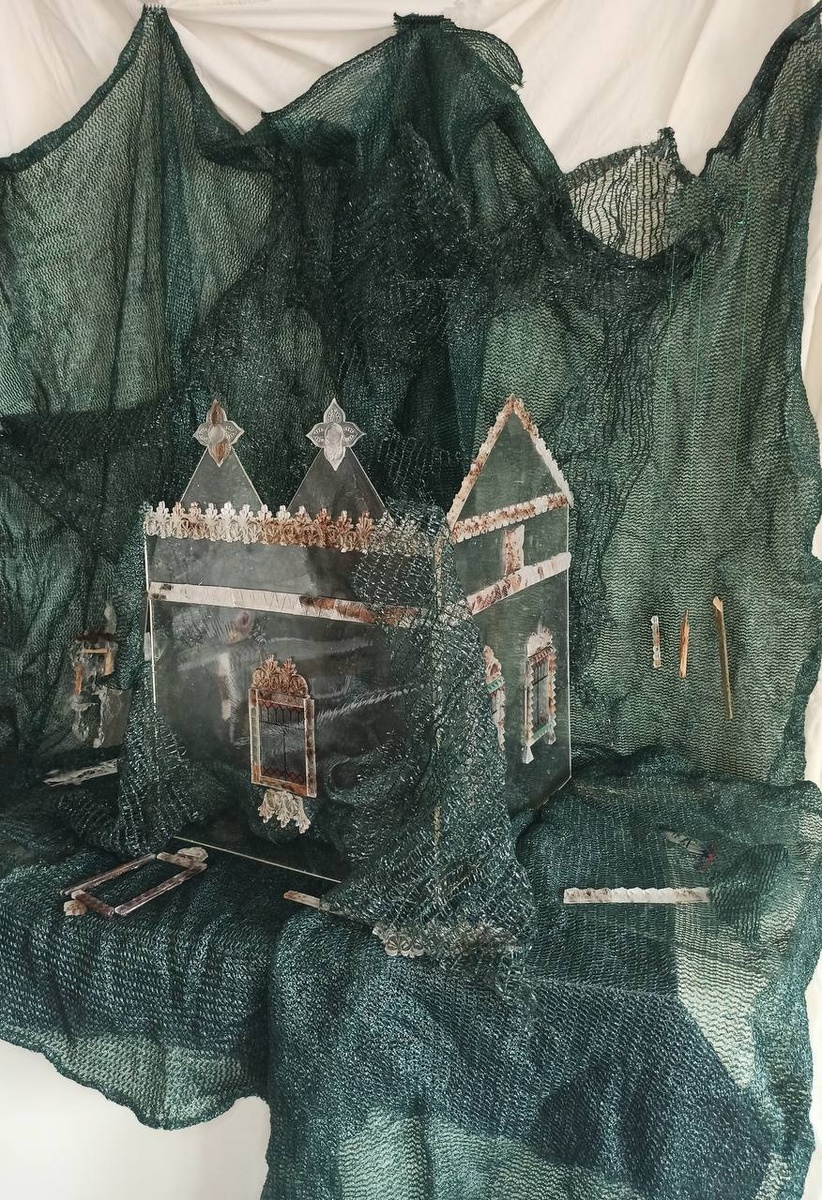
I built the project’s mythology through a pseudo-scientific article laid out as an artist’s book. According to the myth, façade netting turns into a material that permeates every sphere of life, its original function erased.
Within two or three months of starting work on the project I noticed the following trend: people who knew about the project started noticing, in their own words, just how much façade netting there is on the city’s streets; regularly posting photos of it on social media also led followers to report that their perception of the netting had changed.
I made a myth out of reality, and now the project is turning into something of an experiment in returning the myth to reality. I keep asking myself: how does an idea go mainstream? Can I take the project’s myth to a mass audience? And how? Since the myth I created already rests on the fact that façade netting really is all over the city, my task is to draw people’s attention to it. I try to do that through street art and through participatory practices.
One such participatory practice is the project “Delegated Interventions.”
Can you tell us what that project is about?
People are invited to take an intervention kit and «intervene in something». The kit consists of a sign to be mounted on façade netting reading «Neo-Neo-Russian Style. Approved», a postcard with a photo of one of the previous interventions, and a certificate of a true adept of the Neo-Neo-Russian Style.
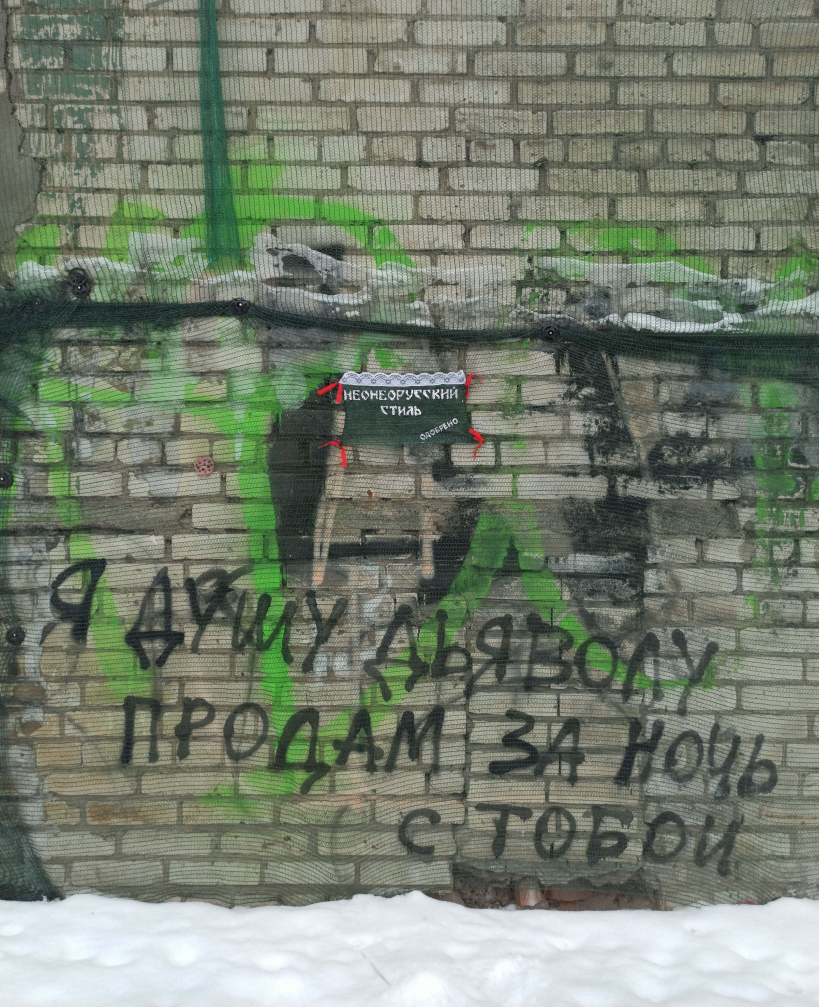
Anyone who takes a sign is granted the right to hang it in a place of their choosing that meets the canons of the Neo-Neo-Russian Style, thereby endowing that place with the characteristics of the style. The canons are borrowed, with slight adjustments, from Luke Turner’s metamodernist manifesto — which leaves a wide field for interpretation, so participants pick their site of intervention entirely at their own discretion.
Each person receives a «certificate of authenticity», which they are invited to fill in themselves after their first «intervention» and become a true adept of the Neo-Neo-Russian Style. Once the sign is up, the participant sends me a photo of the intervention and the address — that photo is then printed on a postcard and sent to the next participant.
Do you have an example of a street art piece that provoked interesting reactions?
In winter I made a street art piece on one of the abandoned buildings in St. Petersburg that’s wrapped in netting — I put up a sign reading «Welcome!» above a boarded-up door. Time passed, the work settled in, and then one spring day, walking past the house, I saw that someone had taken the welcome literally: the door had been kicked in.
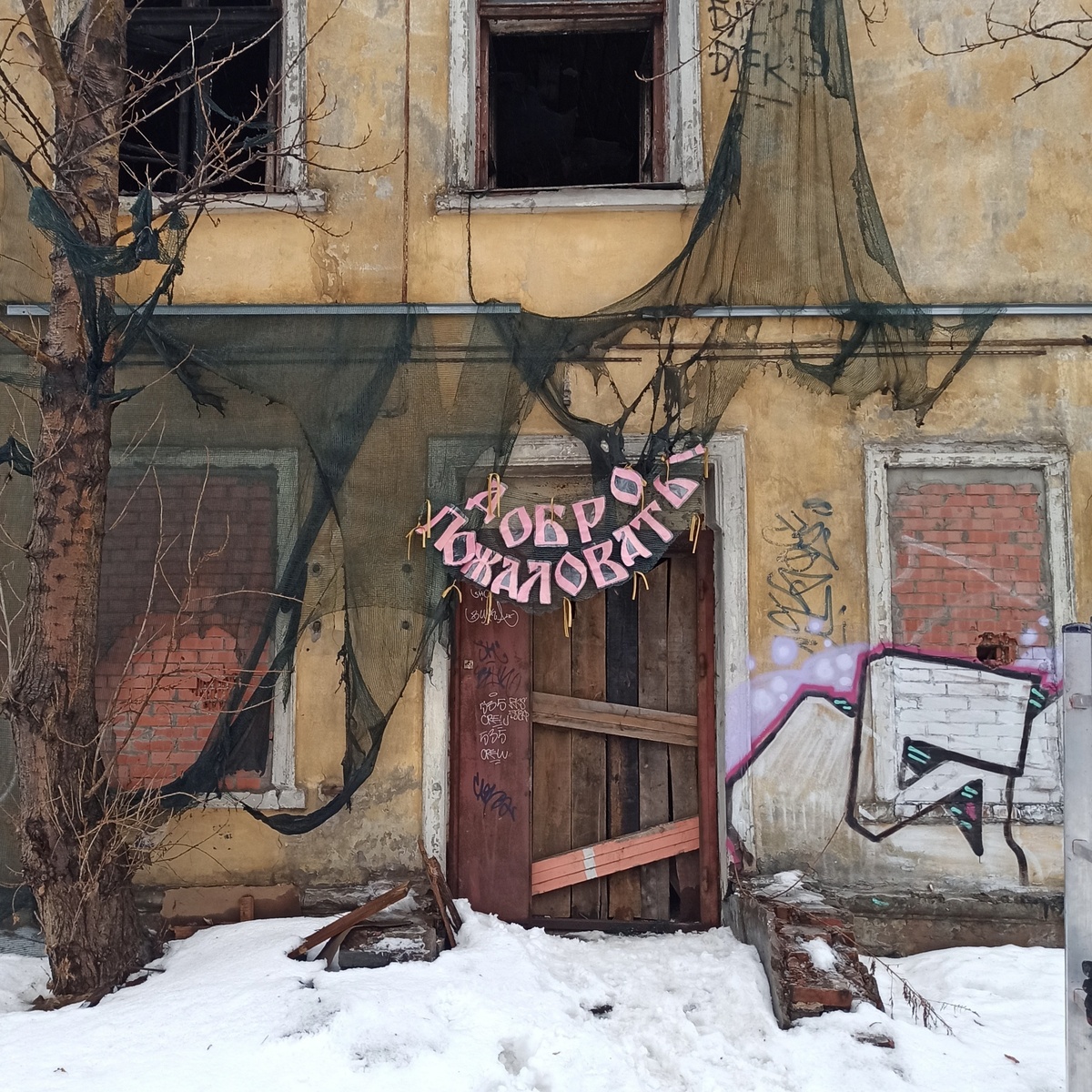
So now I have the work documented in two versions — with the door closed and with it open. I really enjoy watching people choose which of the two postcards they want.
How did you come to contemporary art?
Contemporary art has always interested me in all its forms, including cinema, music and theatre. I used to work in product design, and at some point I realized there was something I wanted to say through art — and I started saying it.

What matters to you in contemporary art?
A well-thought-out idea, expressed in the ways that reveal it most fully. I love experiments and the element of surprise. I always try new things myself, and I value that highly in other people’s projects.
Which moments do you consider the most important in your career?
Honestly, everything that has happened matters. Every exhibition, every fair, every work that got made or, for whatever reason, didn’t. These are all the points at which you become who you are.
Sometimes you see the result only after a long time, and that result may not be practical at all. The most important thing is that I learned to think in terms of projects. Beyond being useful for developing a statement, it’s also fun, because everything around you starts to feel like part of a project.
How did the “I Want Into the Art World” program affect you?
When I realized I wanted to speak through art, I started looking for information about how this field actually works. I understood that I needed a set of documents.
I found the “I Want Into the Art World” program, read the curriculum, liked it and decided to sign up.
Fairly quickly I understood what to do formally, and how. I put together a first trial document set even before the final review (I still have it — I looked at it recently and giggled). The set I made for the review itself was, of course, far better — it got me into two group projects almost immediately. And that’s where my career as an artist began!
Want to build a career in art?
OnStudy online programmes, led by curator Maria Hiltunen-Sedoshenko: art management, selling art and building an artist’s career.
 WhatsApp
 Telegram
 I have a question

