


 All Programs

Art as a many-layered space that draws the viewer into deep reflection

An interview with Tatyana Dubinets
Hi everyone! Welcome to issue 19 of #ourstudents — a series of interviews in which our students talk about themselves and their art.
For this issue I’ve invited the artist Tatyana Dubinets, who graduated from the Repin Academy of Arts and, on leaving its walls in 2018, went into contemporary art.
How long have you been making art?
I’ve been making art deliberately since 2009, when I joined L. V. Eliseev’s painting studio. From then on I took part in group shows and joined the artists’ club of my home town, Novocherkassk. My relationship with art grew deeper, and I realized how much more serious everything is than simply getting a studio from the Union of Artists. I went from my first steps in international architecture and design competitions and self-organized solo shows to accepting that there is another kind of art — current, contemporary art.
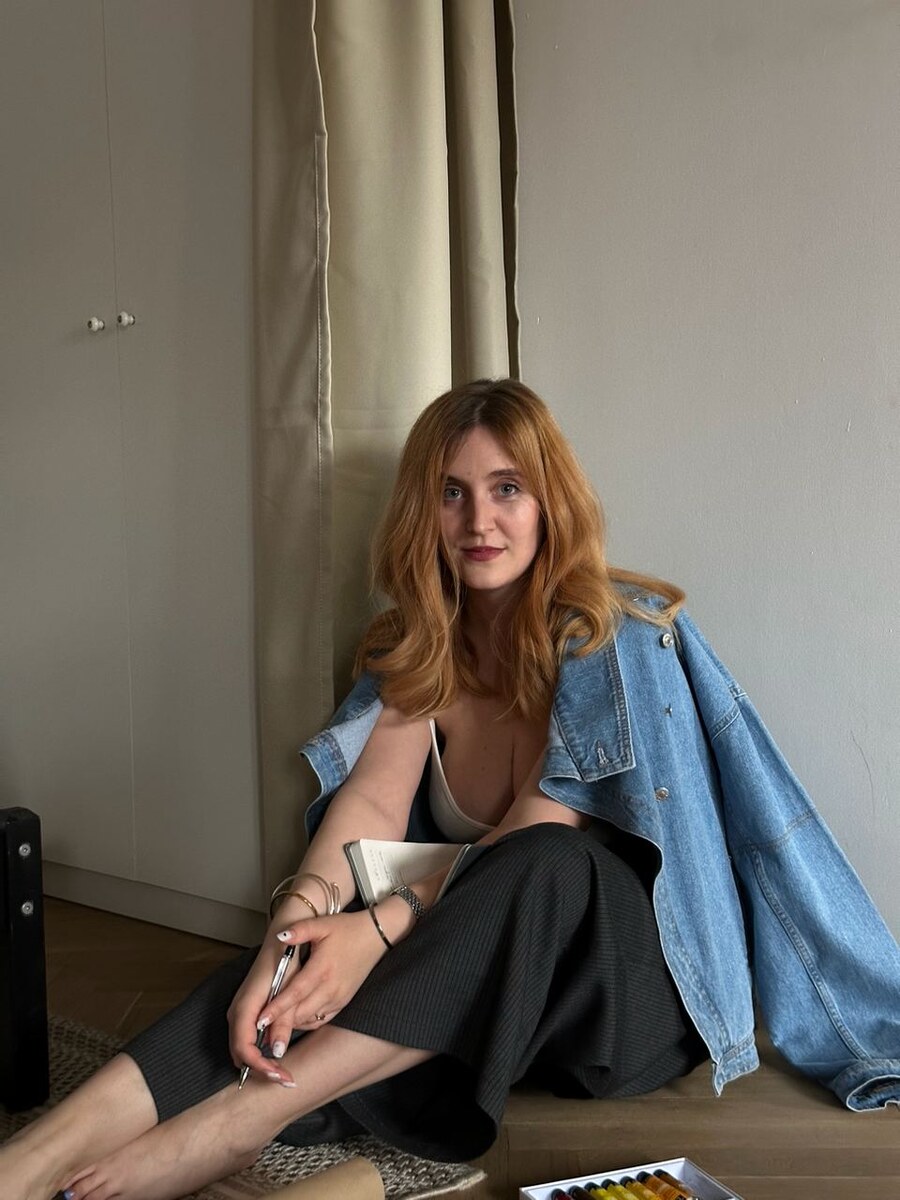
My practice could be described as a divine likeness achieved through a contact charged with the all-encompassing force of Eros. I work with themes of the body, of the liminal state within dreams, of motherhood and femininity. My paintings gently carry the mind into another dimension. At the core of the practice is a search for safe ground on which to work with our unconscious.
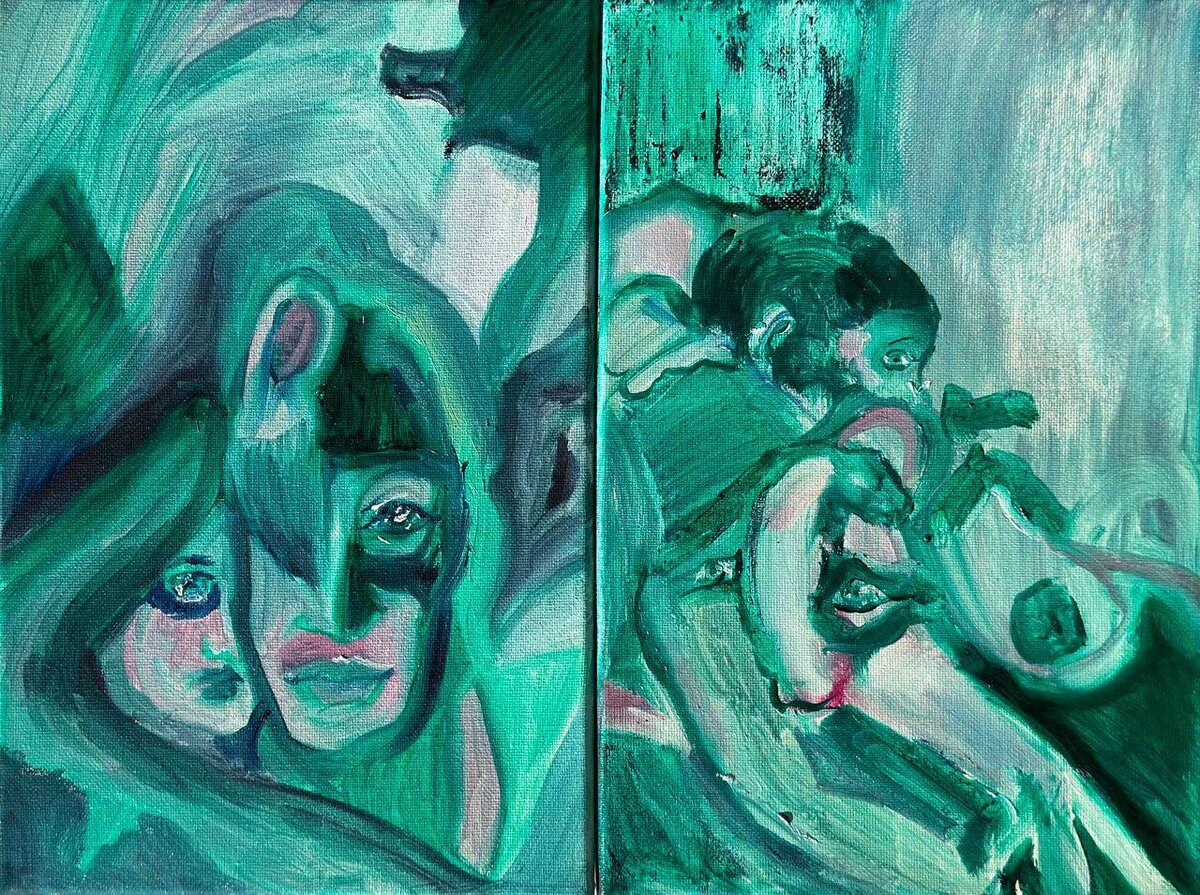
To get the adhesion I need in the first layers, I use acrylic-based paints mixed with coarse sand and quartz vinyl. Over that I work with oils and aerosols. This technique reveals the inner structure of the works, pulling you into a dream and creating textural interference. That’s how I build a many-layered space: the first layer is an abstract ground, the second is naivist figures, and the third is an expressive gesture, the connective tissue that gives movement, chaos, and wholeness within that chaos.
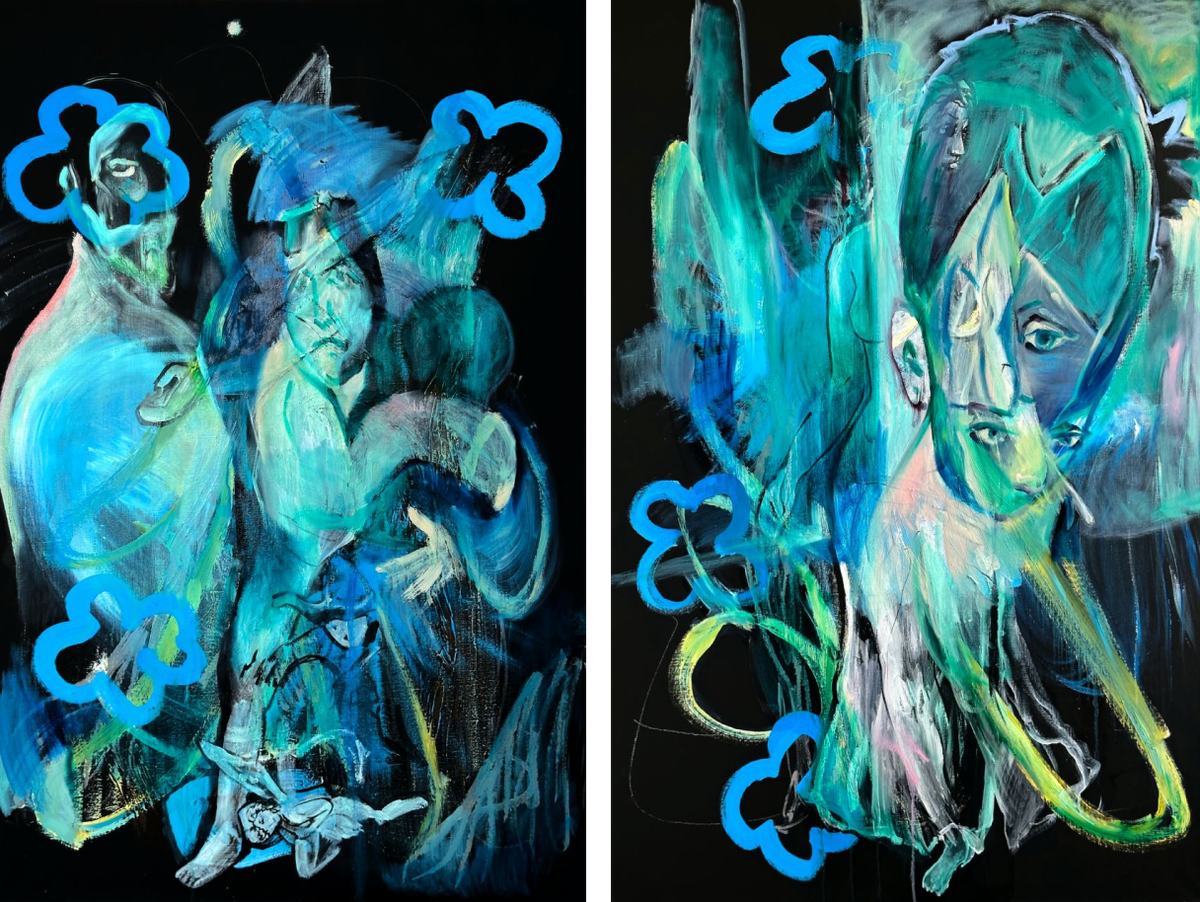
I fill my paintings with symbols I remember from childhood, and the central one is the primitive flower that my mother used to doodle during phone calls. A particular role in my work has been played by the mother — a figure that is both traumatic and therapeutic. A child remains, by inertia, in a syncretic state with the mother. That speaks of the tragedy born of people’s longing for a merging that is impossible.
What is the main theme you work with?
The main thing for me is to build an inner structure in the works that immerses the viewer in a dream-reality — like a river beneath a river. The main themes of my work are femininity, dreams and motherhood, and they come out of my own experience and my perception of the world. Understanding what exactly I want to talk about came through competitions and exhibitions, and through engaging with the art world.
Tell us about your new series.
In my new series “The Carbon Age” I continue to explore the theme of the body, which has already become part of my recognisable artistic language. It isn’t the first time I’ve turned to this subject. In the summer of 2023, at the porter house by Botanichesky Sad metro station, I showed “A Midsummer Night’s Dream”, an exhibition focused on the phenomenon of the gaze from the perspective of the history of psychoanalysis and of lucid dreaming.
The current project, “The Carbon Age”, is an artistic investigation of artificial intelligence through the lens of the body. Who do we become once we find ourselves in a safe space? That is the central question of my work. The control exercised by artificial intelligence, as a structure imposed on thought-forms, on the body and its movements, matches the new nature of emotional practices.
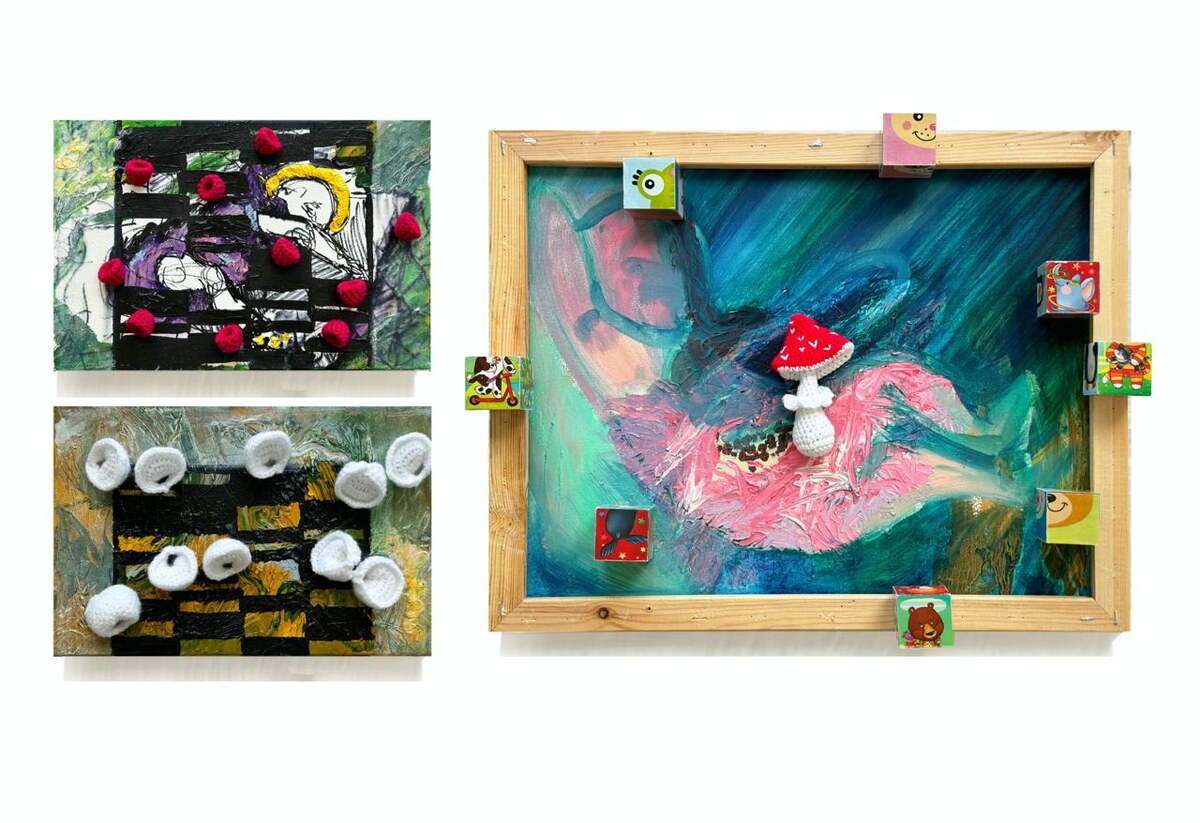
The project grew out of Aldous Huxley’s Brave New World, published in 1932, along with the film and television series of the same name. It involved working with archives and studying artists who deal with cybernetics, such as Zlotnikov and his “Signal System”. The research also draws on my own experience of motherhood.
O wonder! How many goodly creatures are there here! How beauteous mankind is! O brave new world, that has such people in’t! — William Shakespeare
That line set me searching for an answer: what will motherhood of the future look like?
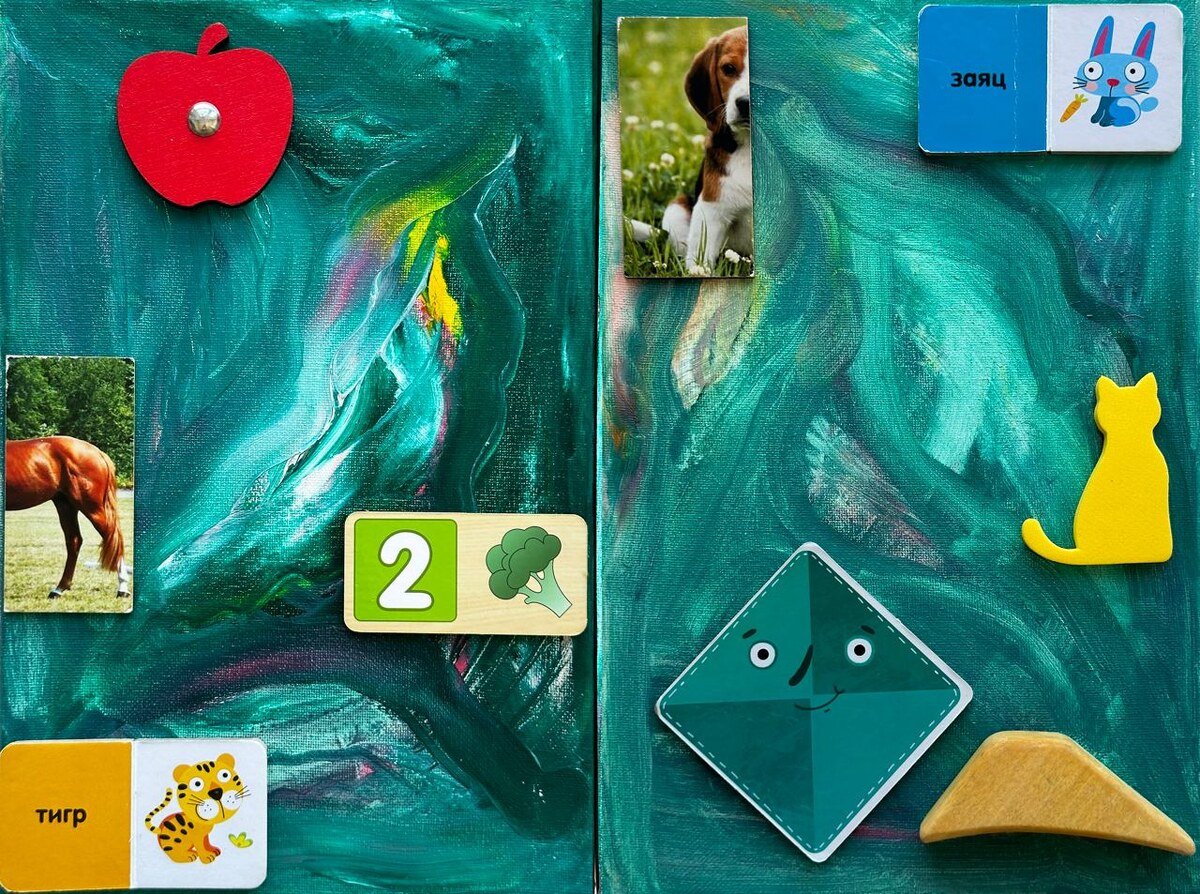
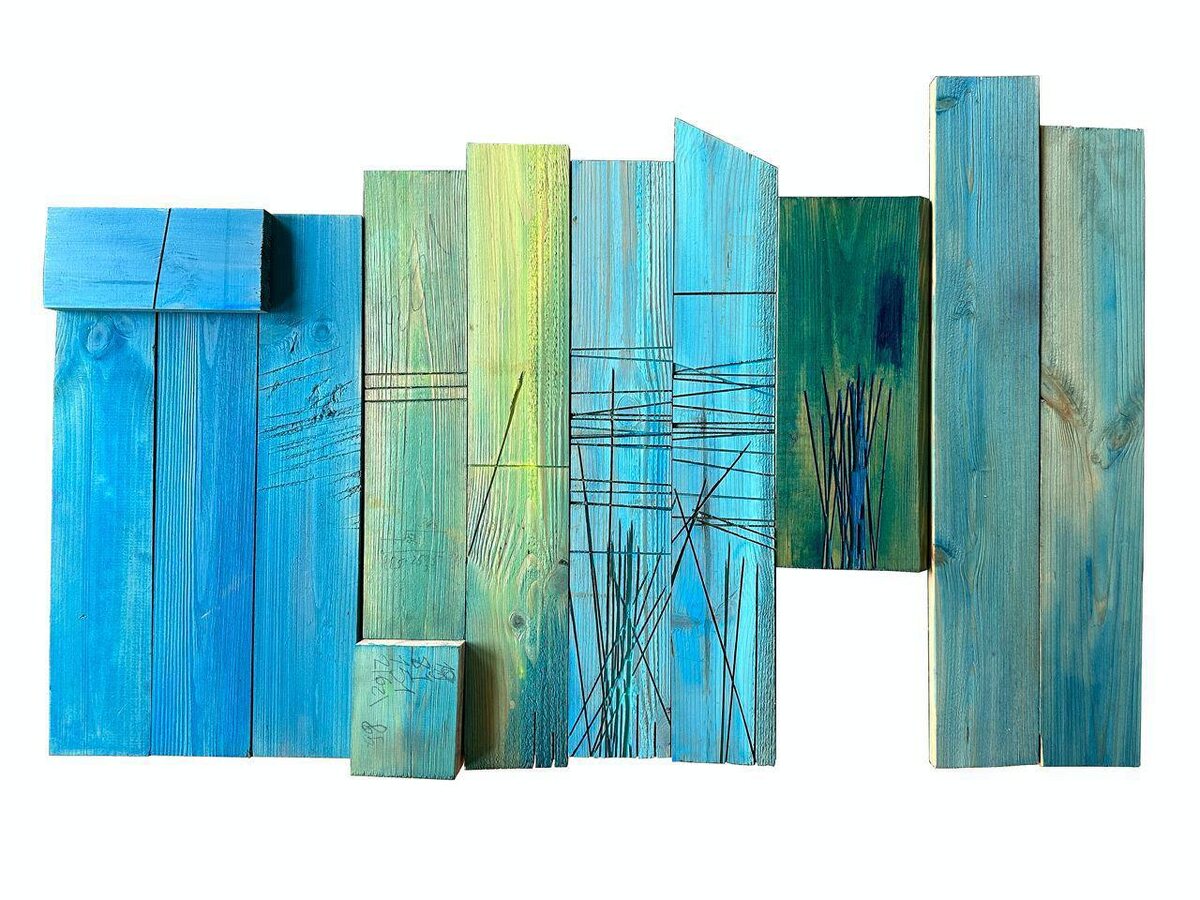
The series includes painting, works on paper and art objects. In the paintings I present silent, almost theatrical interiors of motherhood, including very personal sketches, portraits and found objects — toys that stand as historical evidence. The point of this approach is to underline the boundaries of extreme constraint on the self, boundaries that disappear behind the elegant masks of social approval.
What matters most to you in art?
Sincerity and emotional contact with the viewer matter to me. What I value in art is “that moment when it gets me”! And relevance too — it should be an account of our own time, reflecting its language, and of artists’ urge to convey what they feel through painting and other media.
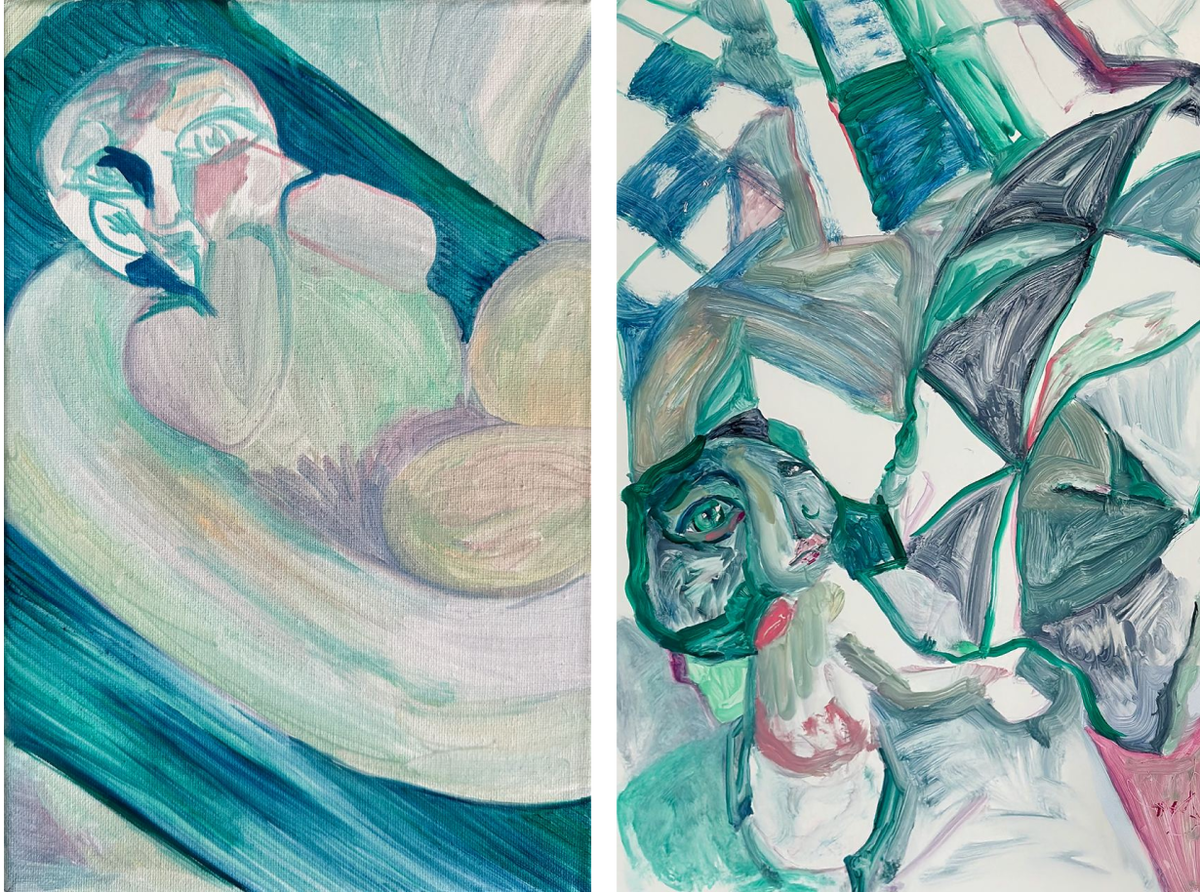
Tell us about the figure of the “bad woman artist”.
The “bad woman artist” figure is my alter ego, a way of living out the other reality I can’t reach through everyday contact with the world. I’m glad we live in the age of the internet. You can keep a safe distance from the viewer and still be your “other” self and have that contact of pure Eros. It reflects the inner feelings and doubts that come with making art. It’s a wonderful way of expressing yourself and testing your limits, both as an artist and as a viewer.
I fall asleep as an ordinary person and wake up as someone else, carrying the experience of everyone and everything that lived before us. My practice of travelling in dreams helps enormously with this. Once the subconscious gives permission to analyze the emotions and problems I’ve lived through, the dream starts producing a matrix of possible scenarios, full of details, images and patterns of thought, all aimed at solving the problem. When I’m awake I give those images an almost physical form, decoding them into visual language.
Being the product of the closest possible likeness to cosmogonic twins. In this, the cradle of human life repeats the cradle of the world. Thanks to my alter ego I’m learning to build pseudo-twin relationships based not on the density of Eros but on dissolving into your partner, at the cost of your own wholeness. In such relationships no single substance is created, because one of the terms turns into zero. But that’s exactly the degree of destructive merging that’s out of reach for me in ordinary life. Allow it, and every term turns into zero.
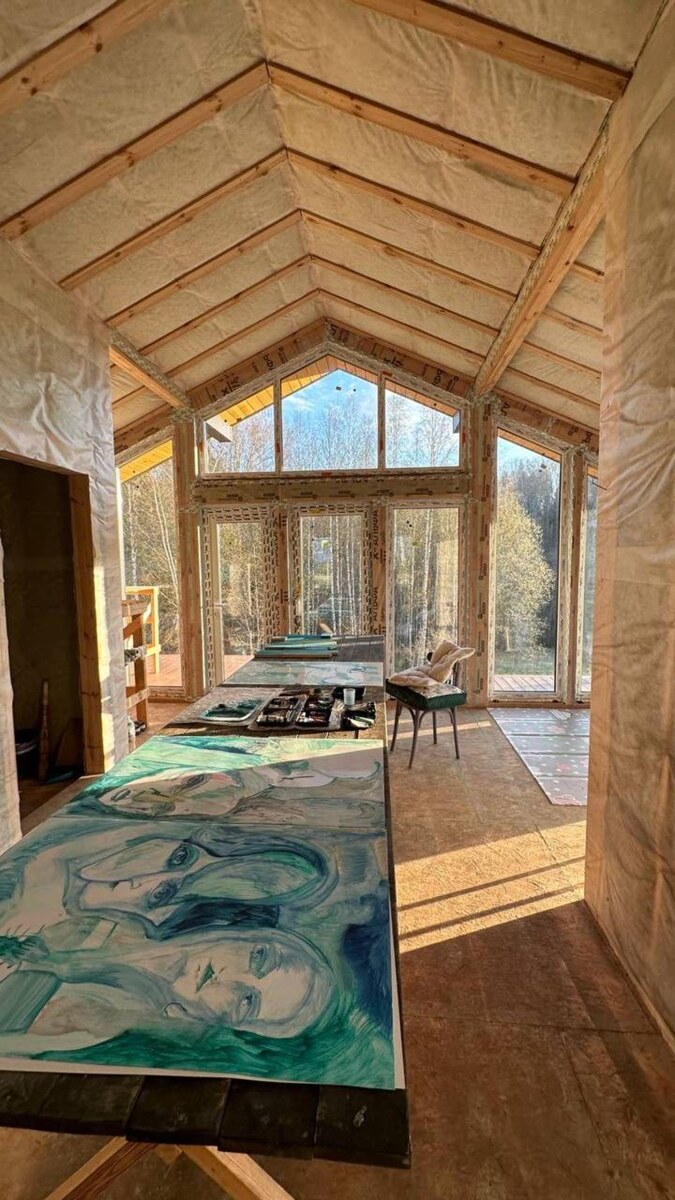
My ideal studio would have a spirit of freedom about it, like in Clarissa Pinkola Estés’s Women Who Run with the Wolves. A studio is your inner home, and it’s especially important for a woman to be able to return there and refill her strength. It’s a big, light space with wooden floors, a large wooden table, a workbench, every tool you need, floor-to-ceiling windows and a view of nature.
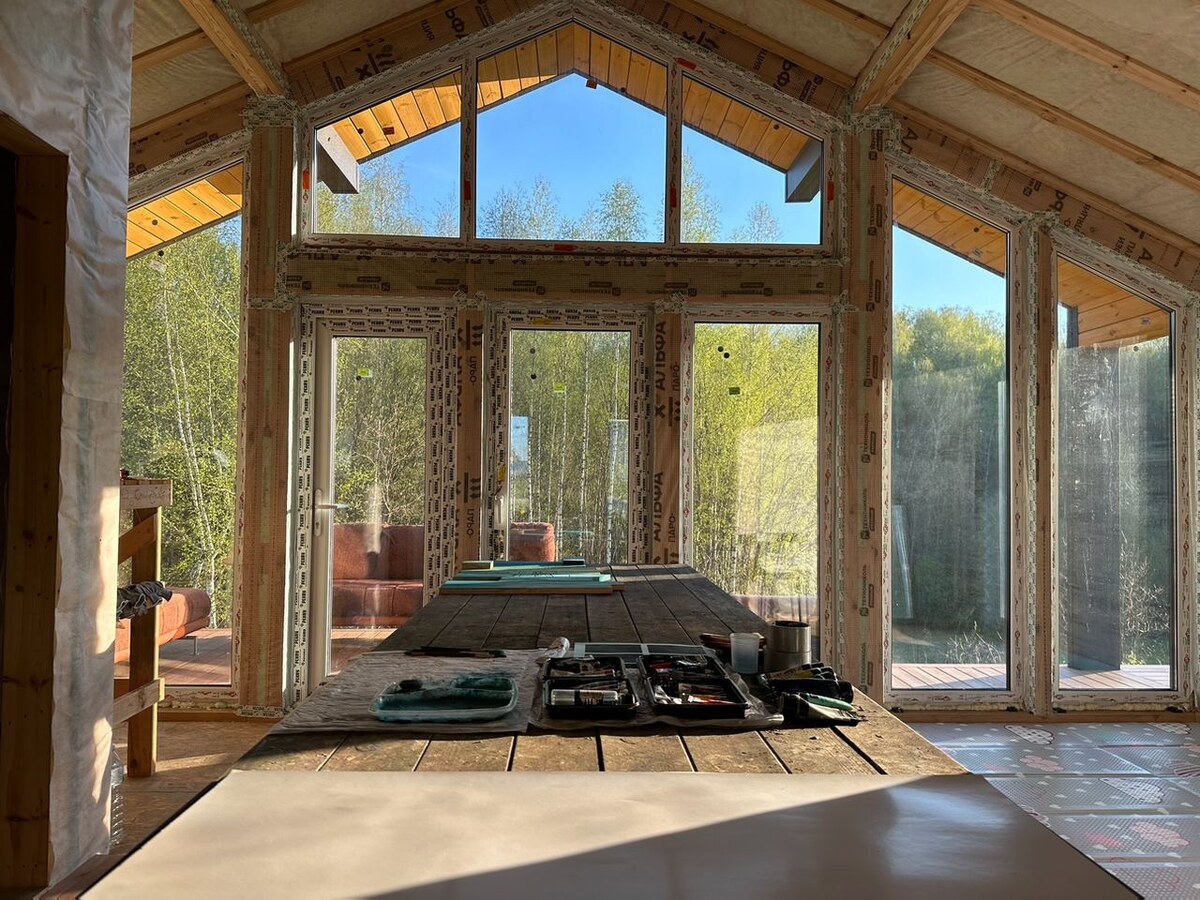
I’ve had several studios I loved: one in my home town of Novocherkassk, then a factory space in St. Petersburg at Sevkabel Port, and now a studio in Moscow — and I’m very happy to be making work in this particular place of power.
Tell us about cultural life and training your eye.
I try to immerse myself in the cultural life of Moscow and St. Petersburg. Travelling to other cities and countries for art isn’t easy for me right now, since I’m a young mother on maternity leave. So I go to cultural events with my small companion in tow. My son has already been with me to the Istanbul Modern, to Blazar, Art Russia, every gallery at Winzavod, GES-2, Ruarts, ArtBrut and Erarta.
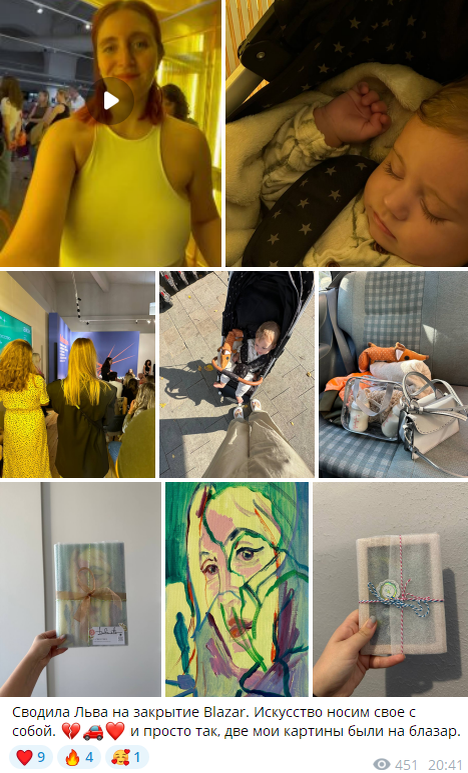
Going to exhibitions and sharing my impressions on my Telegram channel makes me feel that I’m not standing still. And it helps both me and my subscribers see that contemporary art is part of our lives — take it out, and the glass will never be quite full.
I feel as though I’ve spent my whole life building, widening and deepening my visual literacy. I studied architecture for seven years and restoration for two, taught design and furniture refinishing for four, and I endlessly follow every possible channel about trends and aesthetics. I really enjoy it and I love it. To anyone at the start of the road who is only just getting into training their eye, I’d say this: that approach does wonders for your taste and your feel for style, and it widens your horizons so that you see and feel the world in fuller dimensions.
Any advice for artists who are just starting out?
To artists starting out I’d say: be sincere in your choice, and answer honestly — is this the thing that lights you up inside? If it is, you’re definitely on the right path, and it’s wonderful if you’re walking it alongside professionals and inside a community that will always support and inspire you.
The Your Art Muse community is certainly one of the most expert and most welcoming at once — genuinely useful and genuinely warm. It’s a place where you needn’t be afraid to experiment, where you can talk to people and take part in cultural life, widening your knowledge and experience together.
Has our program been useful to you?
Let me start by saying that I can wholeheartedly recommend the program “I Want Into the Art World! A Career as a Contemporary Artist”. On the course I managed to build my own circle of care, where there’s no longer room for the inner critic. I got to grips with how the art world works and who its key players are. I drew a portrait of my ideal mother gallery — now I can see the goal and none of the obstacles. I know what steps I need to take to sign a contract with it.
The program was as useful as it could possibly have been: I came in wanting to become visible in the art world, to put together a set of documents and use them well, to design a museum exhibition project, to start talking to experts, and to present myself both in person and in professional correspondence. I more than delivered on all of it. Everything is in order now, from a full inventory of my works to understanding all the specifics of submitting to open calls.
I no longer make the classic mistakes where a single rejection can knock you off course. I understand that you have to go step by step. Credit for that goes to Maria Hiltunen-Sedoshenko: art manager, curator, art historian, and a wonderful example of how to talk about art with ease, love it, and make others fall in love with it too.
Want to build a career in art?
OnStudy online programmes, led by curator Maria Hiltunen-Sedoshenko: art management, selling art and building an artist’s career.
 WhatsApp
 Telegram
 I have a question

