


 All Programs

Art at the meeting point of abstraction and figuration

An interview with Arseny Blinov
Hi everyone! Welcome to the second issue of our #ourstudents series, a run of interviews where our students talk about themselves and their art.
The artist in this issue is Arseny Blinov. Born in Leningrad in 1972. Graduated from the Saint Petersburg Stieglitz State Academy of Art and Design. His works are in private collections in Russia and abroad.
What inspires you to make work?
I feel a creative need inside me; it is like an itch or a hunger. I have known the joy of making. A powerful, euphoric rush, a wave that sends shivers up your spine to the back of your head. Suddenly some tremendous energy is flowing up through you, out of nowhere. As if God were guiding your hand, and you are stunned by the result.
Picasso said that inspiration has to be worked for. That experience is what helps me drag myself to the studio, sometimes by the hair.
As for the artists who inspire me, they have changed from period to period. The first work I remember was “Venus and Cupid” by Lucas Cranach the Elder. What can I say? As a teenager I was floored by the beauty of his Venus. After that I worked through my own history of art, with plenty of personal imitation and experiment. Claude Monet, Van Gogh, Gauguin, Matisse, Picasso, Malevich. Later Nolde, Rothko, Franz Kline, Richter. My education gave me a wider range, but by temperament I have always felt close to expressionism in any form. Right now I am especially interested in Adrian Ghenie, Alex Kanevsky, Nicola Samorì…
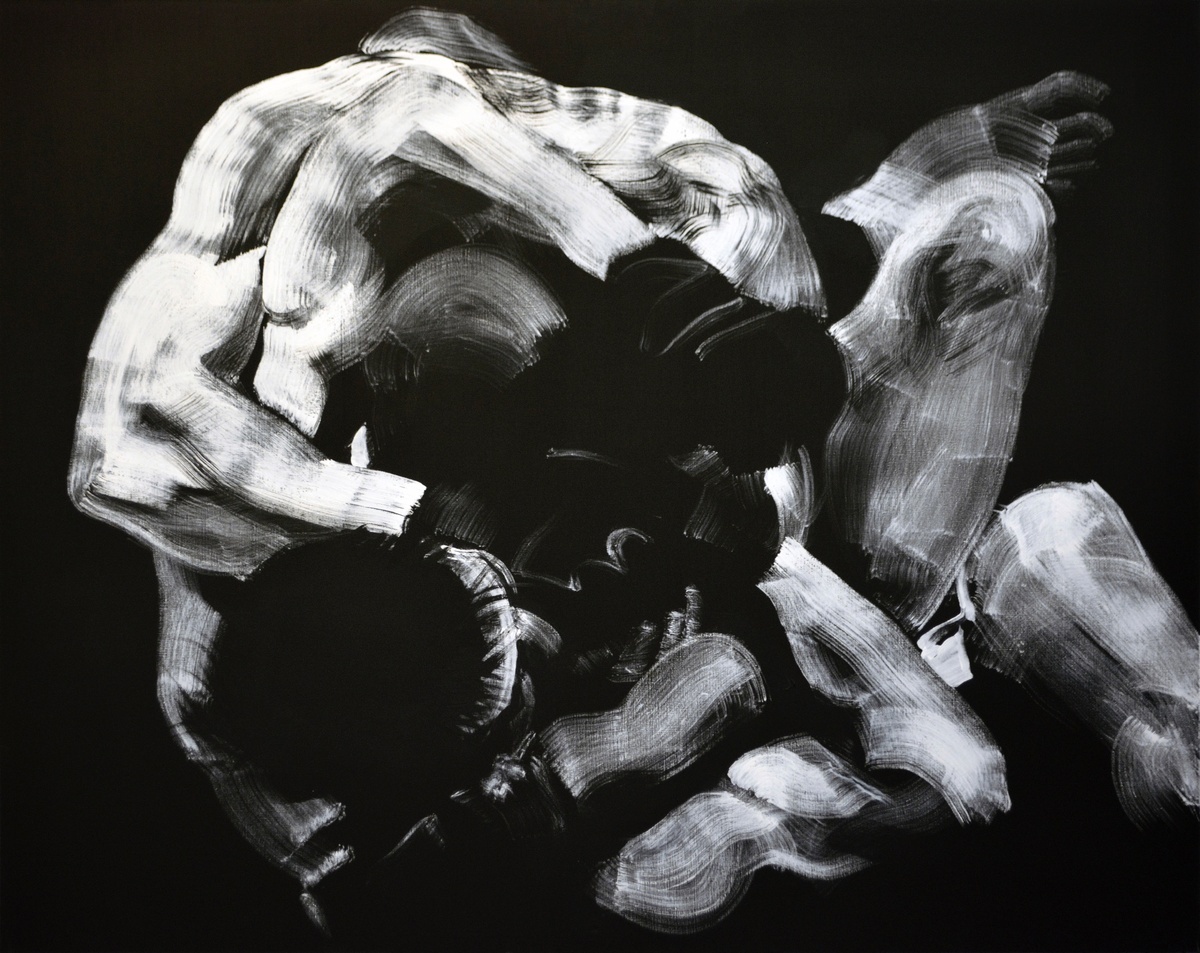
What subjects do you raise in your art?
First, the meeting point of abstraction and figuration. Every painting is built on abstract laws. But there has to be feedback in the other direction too, and that is what interests me. Second, I am still interested in the Renaissance and in how it might sound today.
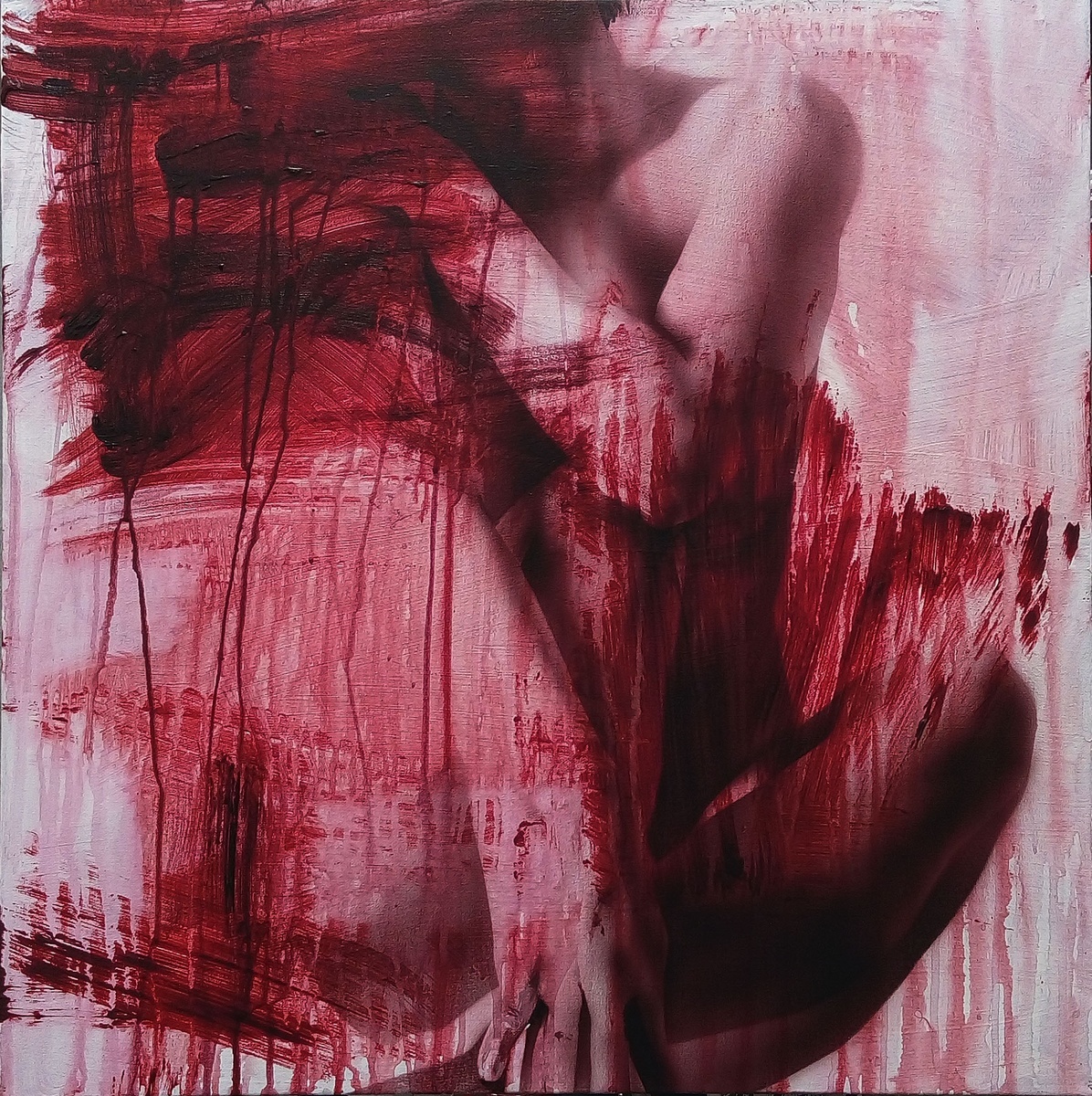
What do you consider your main achievement so far?
I like learning and experimenting. Achievements — well… let’s count: wins at the Moscow International Advertising Festival and other design forums, taking part in Cannes Lions, a couple of dozen magazine layout designs, for Time Out and Kommersant among others. More than ten solo shows. Cosmoscow. Works in public collections.
Last year ten of my works were bought. That gave me the courage to go freelance and give all my time to art and to thinking about it. I suppose that is my biggest achievement so far.
What is your mission as an artist?
Oh, the word “mission” sounds so grand! My first exhibition was in the early nineties, oil painting. At the time I gave up paint for computers, convinced that easel painting had already said everything it had to say. Later I moved back the other way. From 3D and video to graphic design. Then to photography, acrylic, spray cans, stencils, the airbrush, spattering. Now oil interests me again. Soon I will get all the way to pencil.
In the twentieth century everyone died — God, the author, history, painting, rock and roll. In the twenty-first they all suddenly rose again. If that is so, all of it needs rethinking, painting most of all. The people who coined the term “metamodernism” call for a return to the enthusiasm of modernism by way of the disillusionment of postmodernism. I am trying to reach back to what came before modernism, leaning on both practices.
My mission is not a specific goal but a path along which I keep pushing the boundaries. I want to find my limit so I can look past it. Our lives grow richer when we understand that limits can be crossed. It opens up our world.
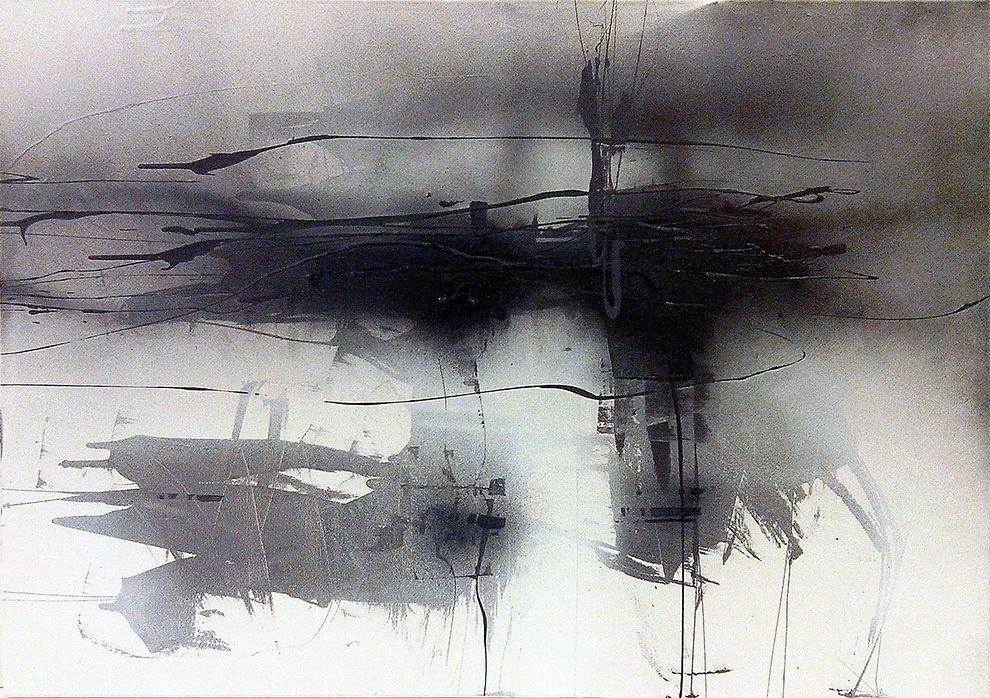
Can you give three pieces of advice to artists who want to make contemporary art?
Any art being made right now is contemporary, whatever anyone says. Postmodernism is running dry, and we are looking at the present moment far too close up to see the whole picture. So the advice I am offering is really my own understanding of how to make good art, which in turn will be considered contemporary.
- Work, do not wait for inspiration. Inspiration has to be worked for.
- Do not be afraid of mistakes — a mistake is a positive result, it is your experience.
- Do not rely on other people’s opinions, not even those you value. Build up your own experience. Other people’s mistakes will not let you make your own.
Want to build a career in art?
OnStudy online programmes, led by curator Maria Hiltunen-Sedoshenko: art management, selling art and building an artist’s career.
 WhatsApp
 Telegram
 I have a question

