


 All Programs

A Love of Fabric, Expressed Through Every Possible Technique and Texture

An Interview with Oksana Muratova
Hi everyone! It’s hard to believe how fast the #ourstudents series is picking up speed! This is issue 11, and the artist in this interview is Oksana Muratova.
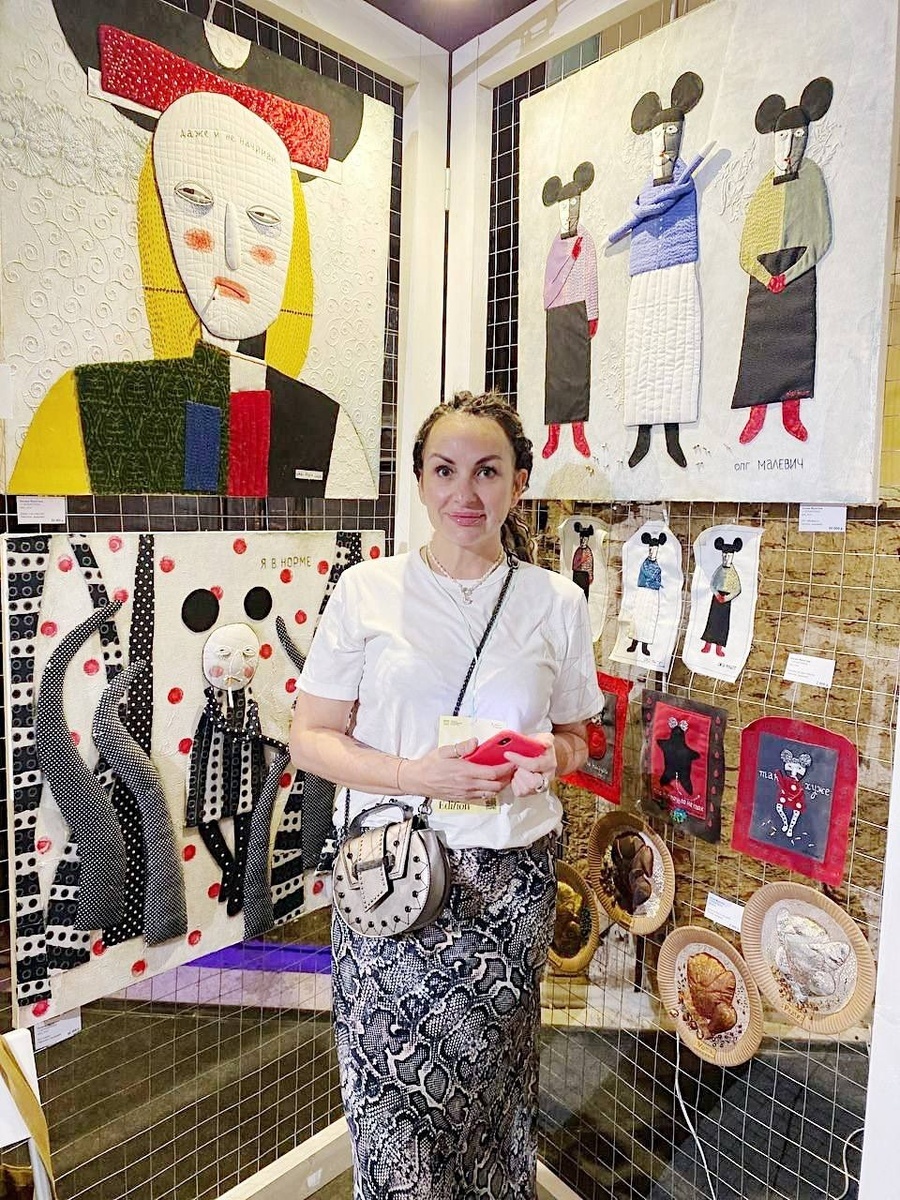
I simply adore textiles — I call myself a “rag soul”. When every possible technique, fabric, texture and stitch comes together, I feel an incredible freedom to express my thoughts and ideas, giving form to the emotions and memories I’ve lived through.
Why did you choose textiles as your main material?
My grandmother was a wonderful craftswoman and taught me to sew and knit when I was a child. By training I’m a clothing pattern designer. I worked in the fashion industry for a long time, and with fashion designers too. I also spent 13 years making one-off art dolls, and I’ve carried some of that into my current aesthetic.
How did you start making your pictures, and what inspires you in the process?
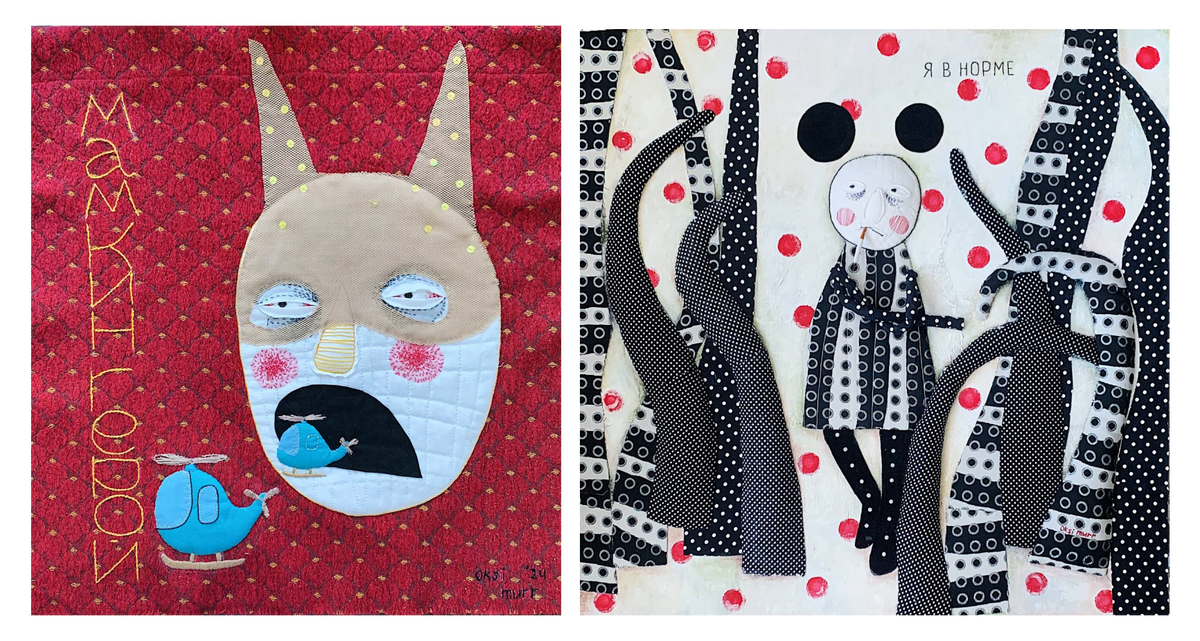
I began painting in 2022. The medium of the art doll had started to feel too tight for me. On my canvases I didn’t just paint — I modelled, embroidered and worked in all sorts of found objects. They were strange works, full of dark fantasy. Some people were even put off or frightened by them. Although, for the record, almost all of them have now sold. What inspires me is the very idea of giving form to memories and emotions through art. By the time I finish one work I always have two or three ideas queued up that urgently need making. So urgently that I can’t sleep or eat until they’re done.
I don’t have a full art-school education, and I knew my technique was seriously lacking in places. So I started asking myself: what am I personally good at? Working with fabric, of course — with volume and drape, an understanding of how colours and textures go together. And naturally my work in doll art has a big effect on what I make now. I love inventing characters and giving them particular emotions and personalities through their clothes and a few symbolic objects.
Which subjects are closest to your art, and how do you bring them into your work?
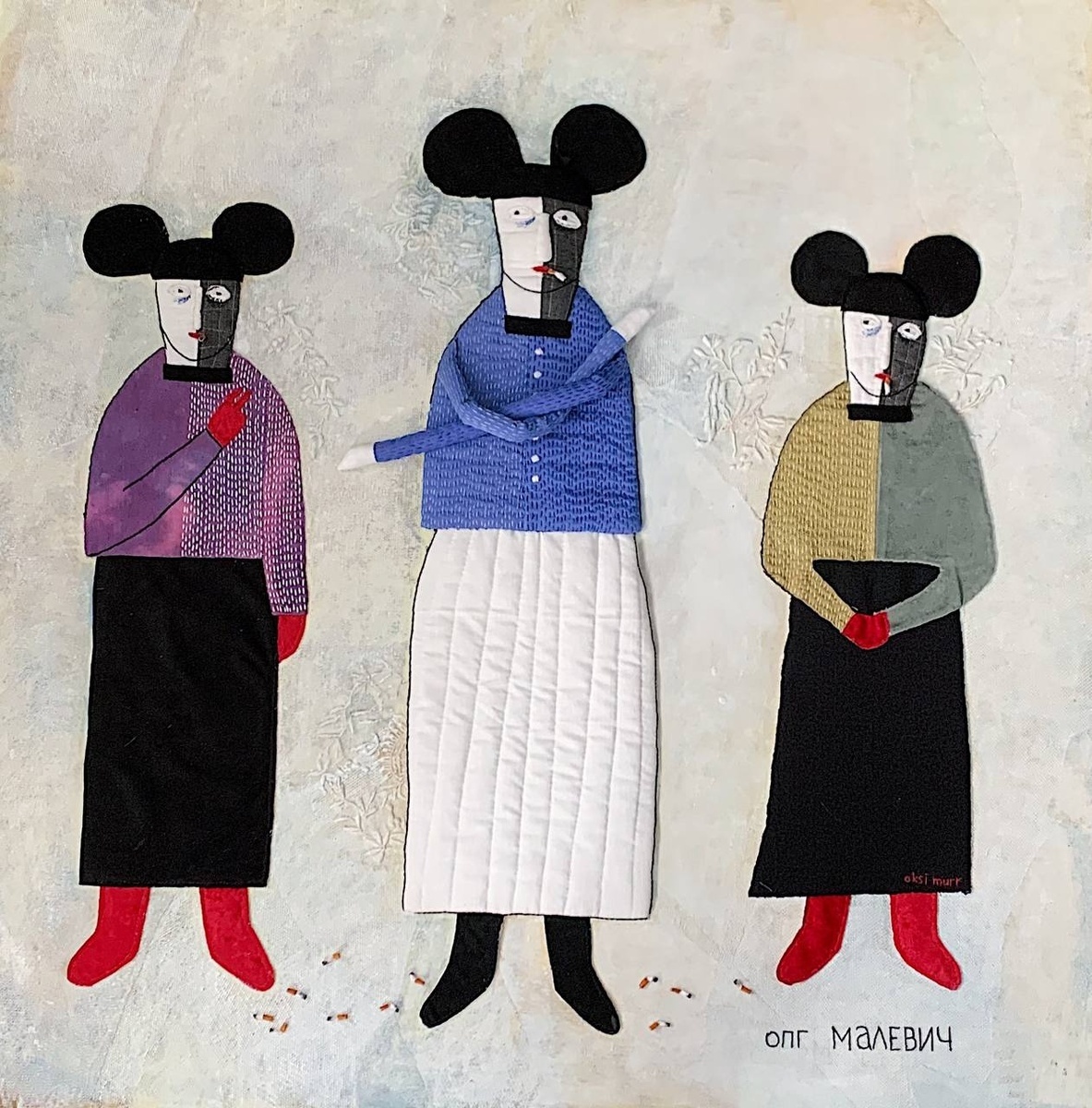
Memory and the connection between generations are very close to me. I like to let my imagination run — taking settled, stereotyped images and turning them into new ones, shifting their original meanings. The new ideas that surface are unpredictable and phantasmagorical, and they show the viewer variations on familiar images.
My work is shot through with irony and humour, even though the stories underneath it can sometimes be very sad indeed. I deliberately use simple, ironic images and add funny little phrases, inviting people into a lighter, more playful mode as they engage with my art.
What would you say to artists who are just starting out?
If you make what comes from the depths of your soul, your memory and your thinking — the thing you simply cannot not talk about — then you’re definitely on the right path. Don’t chase trends, don’t calculate the popularity index of particular subjects; do the thing that sets you off sparking. And keep feeding on art regularly, through exhibitions, books, films and conversations. Every day, every free moment, immerse yourself in art. And if you get stuck along the way, or lose heart, or something doesn’t make sense — go and study.
Time is a resource you can’t get back, so take as much information and experience as you can from people who have already walked the road ahead of you.
What effect did studying on the “I Want Into the Art World!” course have on your work?
I didn’t find my visual language straight away. At first I couldn’t work out how to create images that were not only memorable, but also reflected the manner and style of art being made today.
Once I started studying on the “I Want Into the Art World!” course, I gradually began to “see” differently. I started rethinking my art so ruthlessly that my medium, my visual language and my concept all changed completely. Looking at art regularly, plus everything I got from the lectures and webinars, helped me understand contemporary art and really feel it. Now I listen to and read about art with enormous interest, and I want to know more and more.
And one more piece of advice I always give without hesitation: if you get stuck along the way, or lose heart, or something doesn’t make sense — go and study! I always do it myself, because time is a resource you can’t get back. And so as not to waste it, you need to take as much information and experience as you can from people who have already walked the road ahead of you. I want to say again that the “I Want Into the Art World!” program didn’t just give me an enormous base of knowledge — it also charged me up powerfully for success!
I really did see my strengths, sorted out the problems that were tangled up for me at the time, and clearly saw my path as an artist — the one I’m walking now.
Want to build a career in art?
OnStudy online programmes, led by curator Maria Hiltunen-Sedoshenko: art management, selling art and building an artist’s career.
 WhatsApp
 Telegram
 I have a question

