


 All Programs

Exhibition Display: What It Is and How to Plan the Way Your Work Is Shown

An exhibition is the event and the project as a whole; the display is how the works are placed in the space. The curator and the artist decide together what that presentation will be. This happens at art fair booths, in galleries and, often, in museums.
In one case a white cube is all we need; in another we have to look for a venue with a character of its own, one that will present the work in a more interesting way. Sometimes the very task of showing a work in a particular way prompts the artist to let a painting grow beyond its own edges.
An exhibition and its display are not the same thing
When we talk about an exhibition, we mean the whole project. The display is specifically about how the works exist within the chosen space and how the viewer encounters them.
I like to distinguish two situations here. There’s a display that is simply good, and there’s a display that gives a work of art a different reading.
In the first case, the curator may place the works competently, evenly and with a good rhythm. They look good together, each one has enough room to breathe, and viewers can move comfortably through the room. In the second, the way the work is shown adds another level of perception to it. The piece starts to read differently precisely because of the space.
That’s why the job of the curator and the artist doesn’t come down to finding a free wall. The curator works with the space and distributes the art according to its logic.
Why the white cube changes how a work is perceived
A white cube is set up so that almost all the attention goes to the art. White walls, open space around the work and the absence of unnecessary visual noise create a certain distance between the work and the viewer.
Take a single work on paper. Hung salon-style in an art shop, it sits among a mass of other works. Leave the same piece alone on a large empty wall, and a person walks up to it and already reads its significance differently.
What’s at work here is, in fact, a purely psychological effect. The work itself is the same as before; what has changed is the space around it and, with it, our perception.
That’s why the white cube is convenient for contemporary art. It immediately sets up a particular way of encountering a work. But a white cube isn’t always what the artist and the curator need.
When the space becomes part of the concept
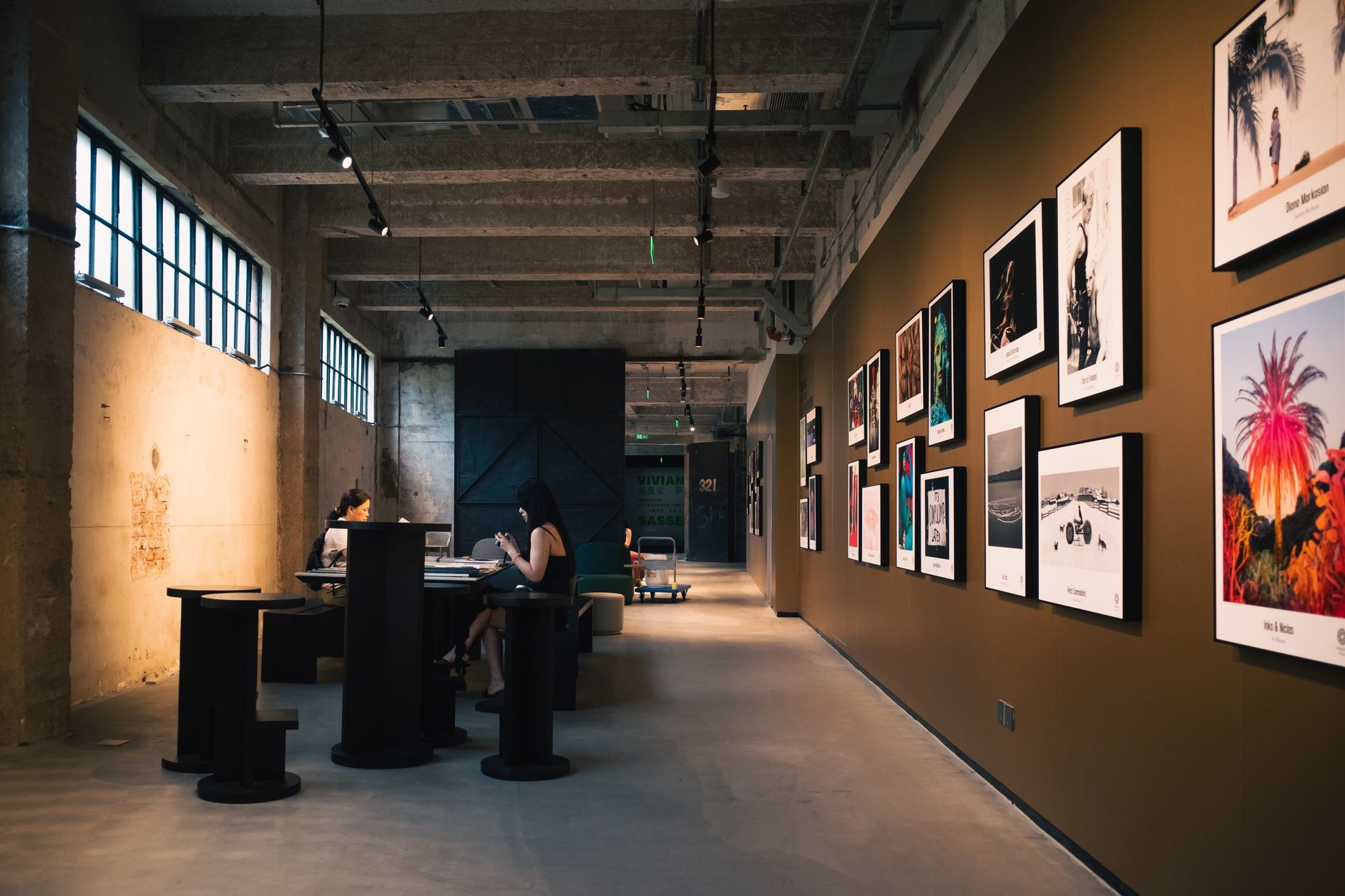
Contemporary art moved beyond specially designated venues long ago. An exhibition can take place in an abandoned industrial space, provided the works begin to operate differently there and the place itself is tied to the curatorial concept.
What’s more, putting together an exhibition like that to the standard of serious contemporary art is considerably harder than making a display in a white cube. The white cube already has a clear logic. In a space with a character of its own, you have to think about how the art will interact with it and whether it will get lost behind the architecture of the place itself.
Sometimes working with the space changes the work, too. An artist may continue a painting onto the wall, taking it beyond the edges of the canvas. For one exhibition, an element like that will be temporary and will disappear when the project ends; in another case, going beyond the painting may gradually become one of the artist’s signature devices.
So an unusual venue doesn’t settle anything in itself. Look at whether it creates a different experience of contact with the art.
Do you need installation views in your portfolio?
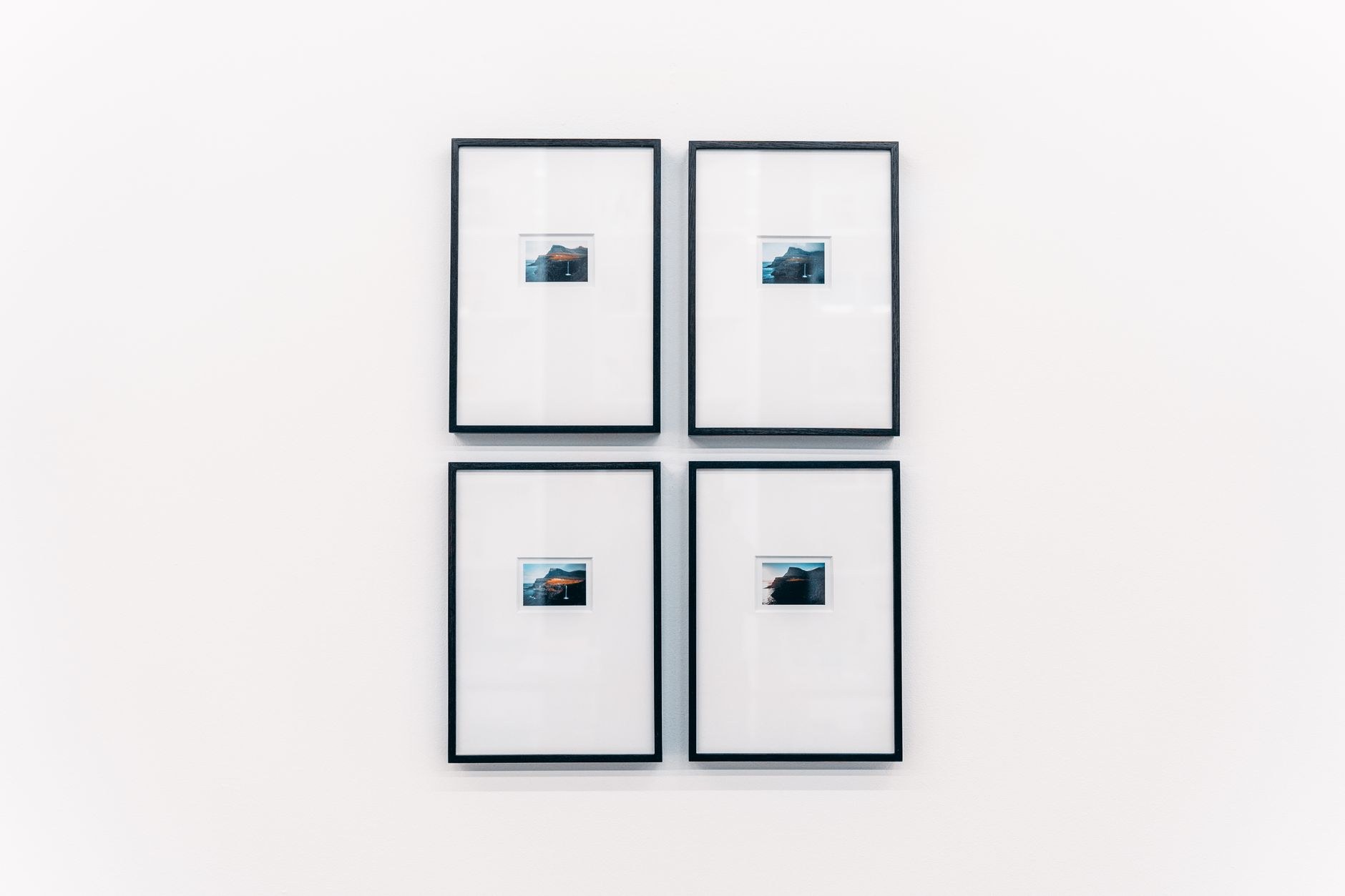
Here I would start from a fairly simple principle: a photograph of the display, an installation view, should tell us something about the work that we won’t see in an ordinary photograph of the piece.
If a curator has placed standard works in a white cube competently and with a good rhythm, a shot like that gives us, on the whole, no new knowledge about them. There’s definitely no need to include installation views just because the artist has had an exhibition.
Large-format painting is a different situation. A photograph taken in the exhibition space helps convey the scale of the work and how it relates to a person and to the space. Another case is a very interesting, non-standard arrangement of a multi-part work. A wall of 108 small miniatures, for example, tells us something quite different about the work than a photograph of one miniature on its own.
With three-dimensional works and installations, shots of the display can be even more necessary. If the meaning arises in the relationships between the parts of the work and the space, a photograph helps preserve that experience. In that case it makes sense to put the curatorial text, dates and links alongside it.
What the display adds to a work
Before showing a work, it’s worth looking not at how unusual the venue appears but at what it does to the work itself. Sometimes a white cube is enough. Sometimes the work needs a different environment, and sometimes the way a work is shown makes the artist step beyond the limits of its original form.
Here the display becomes part of how the work is read. If removing the space or changing the way the work is shown would give the viewer a different experience, then what we have is no longer a neutral backdrop.
The free “Into the Art World” programme
Maria Hiltunen-Sedoshenko explains how artists can sell their work and build a career in contemporary art, from the first steps to an exhibition of their own.
 WhatsApp
 Telegram
 I have a question

