


 All Programs

What Is a Vernissage, and Why Does an Artist Need One?

A vernissage is the opening of an exhibition: the first day on which the finished show is presented to the public. Today the word usually means the opening evening, when the guests, the curator and the artist all come together. The word itself comes from the practice of the advance viewing: before a salon opened, artists would varnish their paintings, hence vernissage.
What sets a vernissage apart from an ordinary exhibition day is the conversation that springs up around the art. Visitors do not come only to look at the works. People the artist can meet and talk to about the work are all in one space at the same time, and the artist can see which of them has taken an interest.
A vernissage should not be confused with a press view or a preview. The press view takes place earlier and is meant for journalists. A preview is intended for a narrow circle of guests. A vernissage, by contrast, is the public opening of the exhibition.
What happens at a vernissage
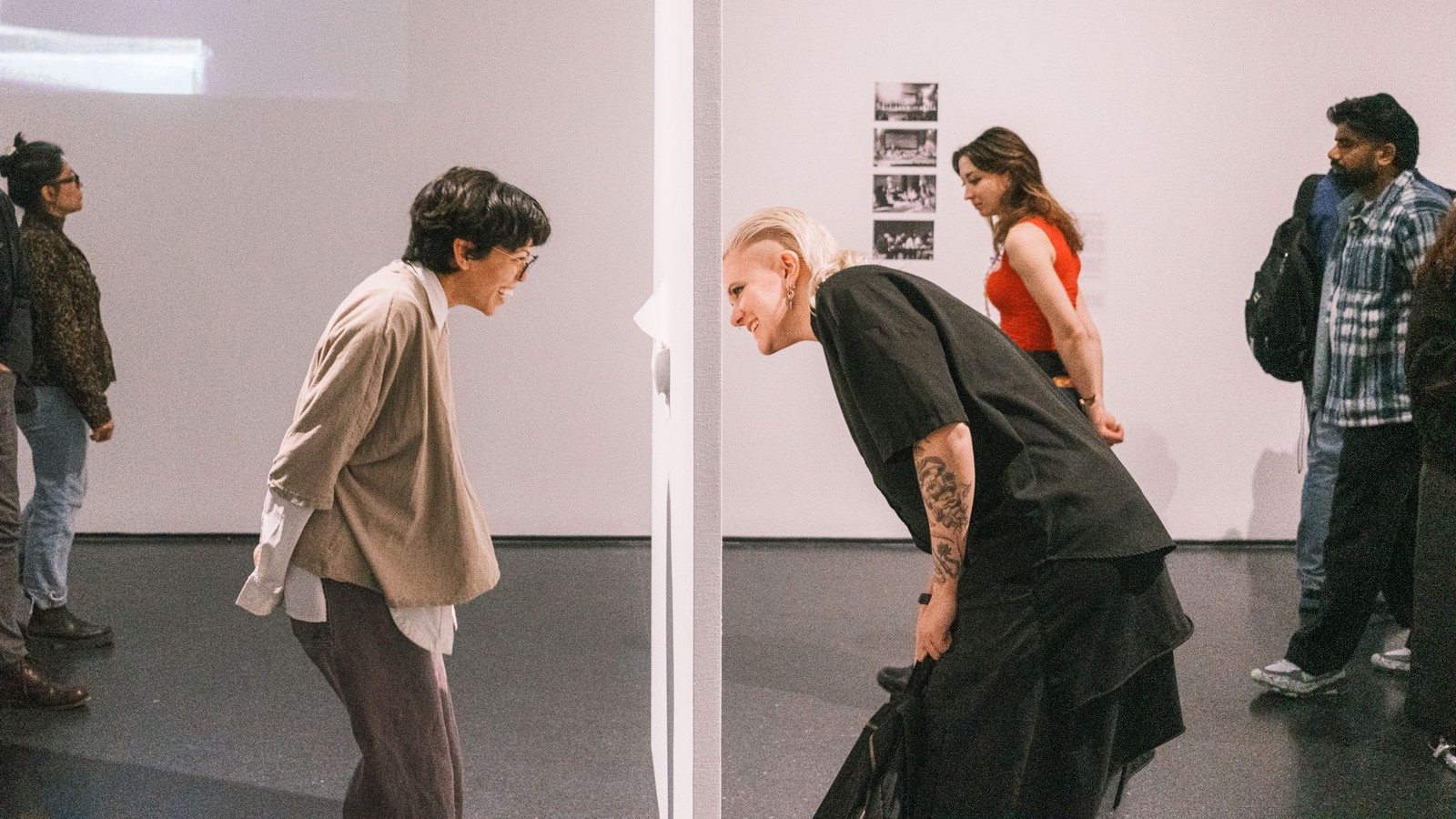
For the artist, an opening is convenient if only because so many people gather in one place. Instead of inviting each person to the studio separately and spending several hours in conversation, you can see a large part of your audience in a single evening.
Say 70 people came to the opening. You can talk a little with each of them and see who is more interested, who wants to ask questions, who is looking closely at the works. These are the people it makes sense to stay in touch with after the exhibition.
Talking with the audience matters to me in general. I am glad that people come to my vernissage and see the works, and that new acquaintances are made. An artist may need an exhibition for more than commercial sales. The contact with the viewer matters too.
That is why it makes sense for an artist to be available for conversation at their own vernissage. There is no need to retell the concept of the project in detail to every guest. It is far more useful to talk, and to notice the people who show a real interest in the works.
Why the exhibition and the vernissage should be photographed separately
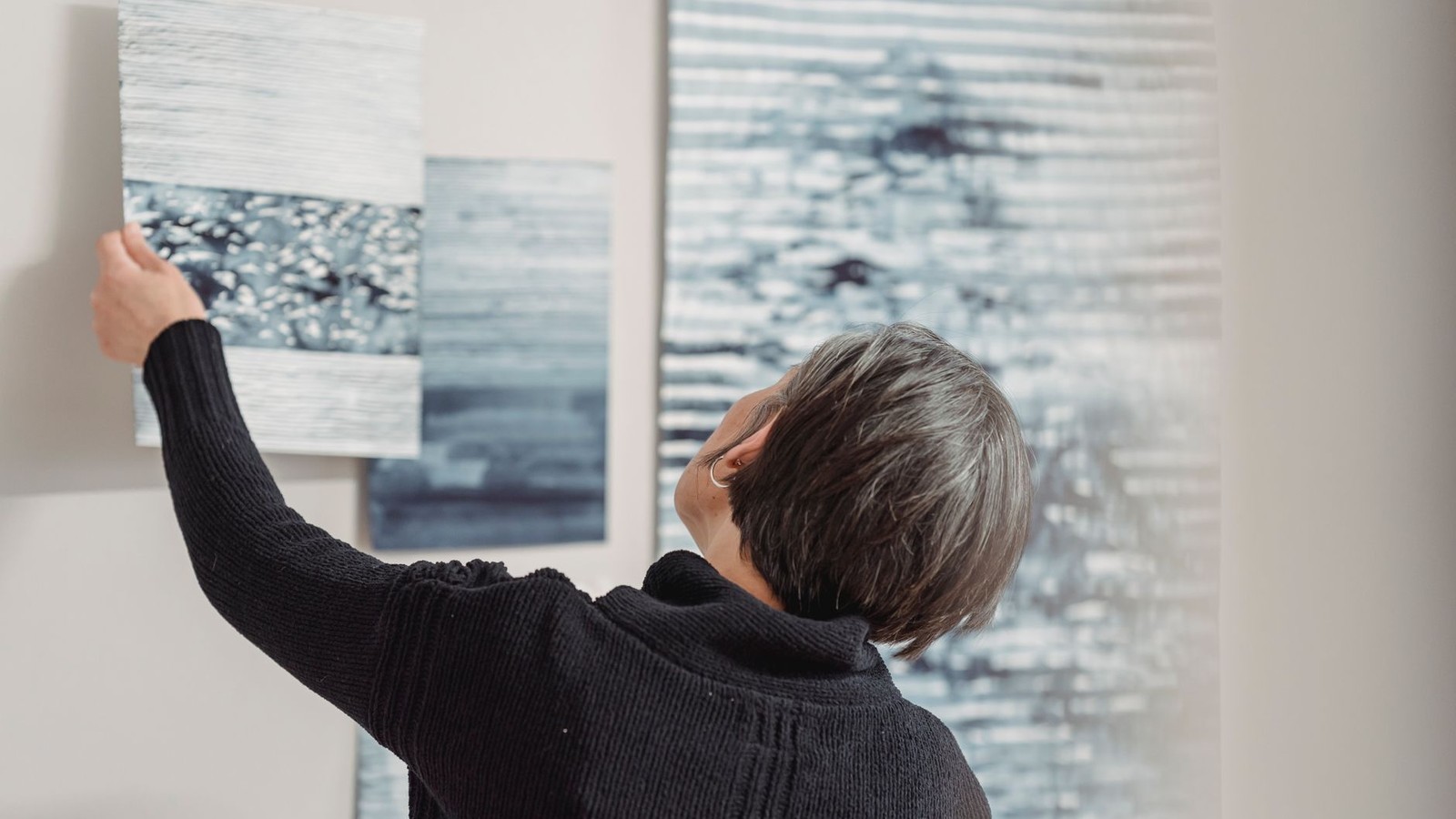
I would arrange the shoot in advance. First the exhibition itself is photographed. You need overview shots, different angles and viewpoints in the room. Each work is also photographed on its own.
Documentation of this kind changes how the art is perceived. The same work will read completely differently when it is seen head-on in 2D and when it is part of a large spatial installation. Photographs of the exhibition as installed show how the works existed within the exhibition space.
At the vernissage the photographer’s task is already slightly different. There are now people in the room, and what you need are shots of the opening. Later they can be used in the announcement of the next exhibition and in PR, to show that guests came to the opening and were interested in the artist’s work.
I would keep both kinds of photographs. The wide shots and the images of individual works are needed to document the exhibition itself. The shots with people record the vernissage and the audience’s interaction with the project.
For every exhibition it is also worth collecting archival documents, including the curatorial text. When the exhibition is over and the space has been dismantled, it is the photographs and the text that will remain as a way to show the project to those who did not see it in person.
What the artist is left with after the opening
The vernissage ends that evening, but the work on what happened there goes on. If you met someone who took an interest in the works, that contact can be developed further. In this sense the opening becomes a convenient meeting point with your audience.
The documentation of the project remains as well. An artist needs good photographs for more than memories of the exhibition. With them you can show the works within the exhibition rather than as separate fragments, and preserve a finished exhibition statement after the show has been taken down.
The exhibition itself goes into the CV. Along with it you can keep the curatorial text, wide shots of the space, individual photographs of the works and shots from the vernissage. Later this documentation will come in useful when you need to show the artist’s professional history or talk about previous projects.
That is why I would not treat the vernissage as a full stop after which the exhibition work is over. For the artist it is rather the moment when the finished project meets its audience, and when people appear with whom the conversation can continue after the opening.
The free “Into the Art World” programme
Maria Hiltunen-Sedoshenko explains how artists can sell their work and build a career in contemporary art, from the first steps to an exhibition of their own.
 WhatsApp
 Telegram
 I have a question

